

The iconic Shinobi franchise, once a hallmark of SEGA’s 16-bit era, returns with Shinobi: Art of Vengeance, a brand-new 2D action-platformer developed by Lizardcube. Known for their impressive reimagining of Wonder Boy: The Dragon’s Trap and Streets of Rage 4, the Paris-based studio once again demonstrates its mastery of bringing life back to beloved retro properties while preserving their core identity.
This isn’t just a nostalgic cash-in. Shinobi: Art of Vengeance is a fully realised, modern action game. One that blends silky-smooth combat, refined platforming, and beautiful hand-drawn artistry into one of the most engaging 2D experiences of the year. Fans of the original Shinobi titles and newcomers alike will find something here to enjoy, provided they’re ready for a challenge.
The narrative of Art of Vengeance is simple and ripped straight from the 80s action movies . You play as Joe Musashi, a stoic, silent ninja shinobi tasked with dismantling the operations of a shadowy military conglomerate known as ENE Corporation, led by the enigmatic Lord Ruse. While Joe doesn’t speak, the supporting cast and fun villains more than make up the part of storytelling, with their never-ending monologues about world domination that slowly flesh out the world and its lore.
As you progress, you learn more about Lord Ruse’s motivations and the lengths that he will take in order to ensure that he completes his task of utter and complete control. Continuing on your journey a few allies join your mission, offering bits of exposition and character development that help ground the high-octane action. The game doesn’t rely heavily on cutscenes, there are some and they’re nice, instead Shinobi weaves story elements directly into the gameplay experience, which works in its favour. Its got all the ingredients of 80’s action campiness, the overpowered military complex chasing you, giant interdimensional demons and horrifying lab made monsters hell bent on seeking you out. If it seems a bit too much, it is, but it works so well for this game.
Shinobi offers more depth than you might expect from a side-scrolling action game. Each level can be revisited for full completion, with objectives including defeating elite enemy squads, finding hidden relics, uncovering secrets, and tackling the notoriously difficult Ankou Rift challenges. Achieving 100% completion isn’t easy, but the game does a solid job of rewarding persistence.

Amulets categorized as passive or combo allow players to tailor their playstyle. Some amulets enhance your attack power or grant additional defense, while others impact your special abilities or alter the gameplay slightly. There’s also a cosmetic system for unlocking and applying skins, allowing you to personalize Joe’s appearance, albeit in a minor way.
The game also introduces a unique system of power progression via Ningi abilities. Tools that unlock new traversal and combat capabilities. Consider these to be similar to upgrades in Metroid, upgrades that you get as you progress the story, letting you revisit previous areas and access paths that were initially unreachable. It’s a welcome addition that adds depth without detracting from the game’s tight linear structure. At its heart, Shinobi is a 2D action-platformer, not a Metroidvania, although it occasionally toys with exploration elements. The distinction is important. Progression is largely linear, with some backtracking allowed through newly unlocked abilities. This gives the game structure and focus.
Combat is so fun. You’re armed with a katana for close-range attacks, either light or heavy attacks are there for you to use, depending on the enemy type. Kunai are used for ranged engagements, small, like daggers that you throw and add in elemental Ninpo abilities. These include fire strikes, a giant spinning shuriken, dash techniques, and more. A particularly clever addition is the Shinobi Execution mechanic. Once enemies are staggered, you can perform a brutal finishing move with a simple button combination. These executions are flashy, and they also reward you with bonuses like additional health, coins, rage, or additional resources. Learn how to pull these off as soon as you can to take the demand lead in your battles, because you will need it.

There’s a distinct rhythm to the combat, encouraging aggressive but measured play. While you can button-mash through some early encounters, success in later levels demands precision, timing, and resource management. Heavy attacks are useful for chipping away at armoured enemies, and the fluid dodge mechanics allow skilled players to dance through combat like a ninja should.
If the combat is surgical, then the platforming is athletic. The platforming challenges are numerous and frequently demanding. Especially in the later stages, the difficulty spikes sharply, requiring pixel-perfect jumps, mid-air direction changes, and strategic use of dash abilities. It’s almost unfair how difficult it gets. With that said, the platforming is challenging, it is also surprisingly forgiving. If you fall, you’re often returned to the last ledge rather than restarting the entire sequence, which makes failure a learning opportunity rather than a punishment.
However, once your health depletes, you’re sent back to the last fast travel point. A design decision that can feel punishing during long stretches between checkpoints. Still, the satisfaction of mastering a particularly tough section makes the effort worthwhile. Some sequences are even structured like time trials, forcing you to flee from fire or other environmental hazards in tense, high-speed runs that test your reflexes and mastery of the game’s movement system. Nothing feels better when you chain all these moves together to succeed, but damn is it hard sometimes.

Visually, the game is a showcase of Lizardcube’s signature hand-drawn aesthetic to great effect. Every environment, character, and animation is crafted with exceptional care and detail. From sun-scorched deserts to lush bamboo forests, neon-lit industrial buildings to mysterious underwater facilities, each level is more than just a backdrop. It’s a living, breathing setting that contributes to the game’s worldbuilding.
What’s especially impressive is the way each level introduces new visual motifs and design challenges, ensuring that the experience never feels repetitive. There’s always something to look at, something new to admire. Enemy designs are bold and often exaggerated, while Joe Musashi himself is rendered with sleek animations that add weight and style to every slash, dash, and kill.
The soundtrack, composed by Tee Lopes and Yuzo Koshiro, is outstanding. Koshiro, known for his legendary work on Streets of Rage and the original Shinobi titles, brings authenticity and history. Lopes, whose compositions for Sonic Mania and Streets of Rage 4 were widely praised, injects high energy and flair. Each track complements its level’s tone and action. Sound design is equally sharp, with impactful slashes, responsive effects, and ambient environmental audio that helps breathe life into each stage.
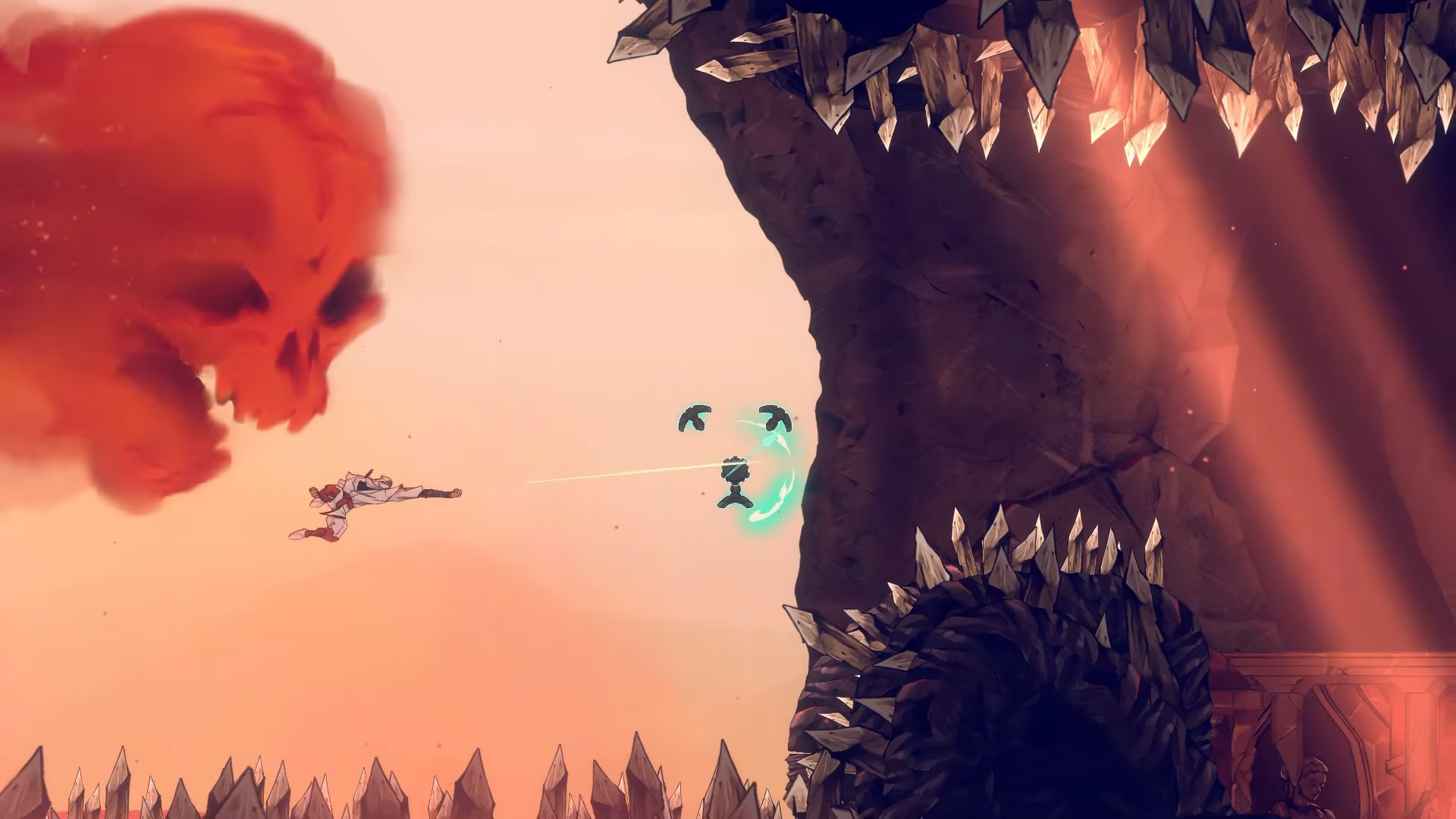
Make no mistake, this a challenging game, especially if you re looking to 100% it. The default difficulty “Shinobi” is how i played the game and i found it to be punishing, particularly in the back half of the game. Enemy variety increases, armour becomes tougher to break, and bosses start hitting extremely hard. To break it up, the game offers multiple difficulty settings, including a Custom Mode that allows you to tailor elements like enemy aggression and damage taken. While the easiest setting may feel too lenient. As an example some bosses can be completed in almost a minute on the easiest setting which i feel detracts from the experience. On the other side of the coin, this is a welcome inclusion for accessibility purposes. Players of all skill levels can find a way to experience the game on their terms.
Shinobi: Art of Vengeance is a masterclass in how to modernise a retro franchise without losing its soul. Lizardcube has delivered an exhilarating, polished, and visually captivating game that honours its roots while confidently forging its own identity. From the moment-to-moment gameplay to its simple and straightforward narrative, from the addictive combat to its precise platforming, this is a title made with obvious passion and craftsmanship. It challenges players but rewards dedication, offering an experience that grows deeper the more time you spend with it.

