
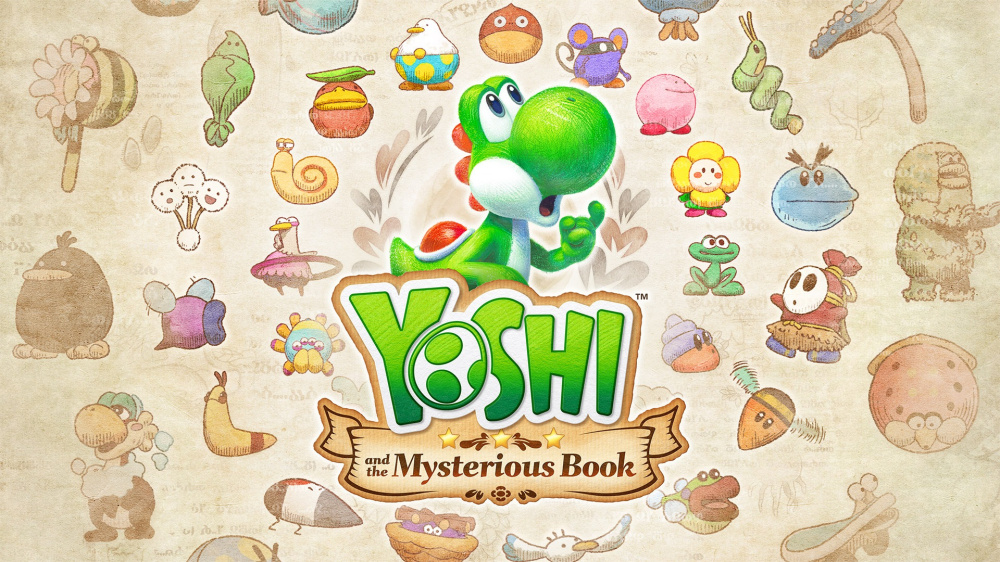
Of all the games I’ve played this year, Yoshi and the Mysterious Book is probably the hardest review for me to write. Not because it’s bad, but because it’s a game that forced me to step back and look at it from a completely different perspective. I love platformers. I grew up with Mario, Banjo-Kazooie, Conker, and plenty of other classic platforming adventures. More recently, I’ve loved games like Astro Bot. Family-friendly games are usually right up my alley, especially since now I have young kids of my own. So I expected Yoshi and the Mysterious Book to be another straightforward platforming adventure. It isn’t.
From the moment I started playing, I found myself wondering why this even game existed and more importantly, who it was made for. Yes It’s colourful, charming and childlike in presentation, yet it doesn’t necessarily feel like a game aimed exclusively at young children. There’s a decent amount of reading and experimentation involved, and the gameplay is far more focused on curiosity and discovery than traditional action. At the same time, it’s so simple and forgiving that I struggle to imagine many adults being challenged by it either. There is no simple way to describe it, its like a cosy, pokemon snap, 2D sandbox platformer starring Yoshi.
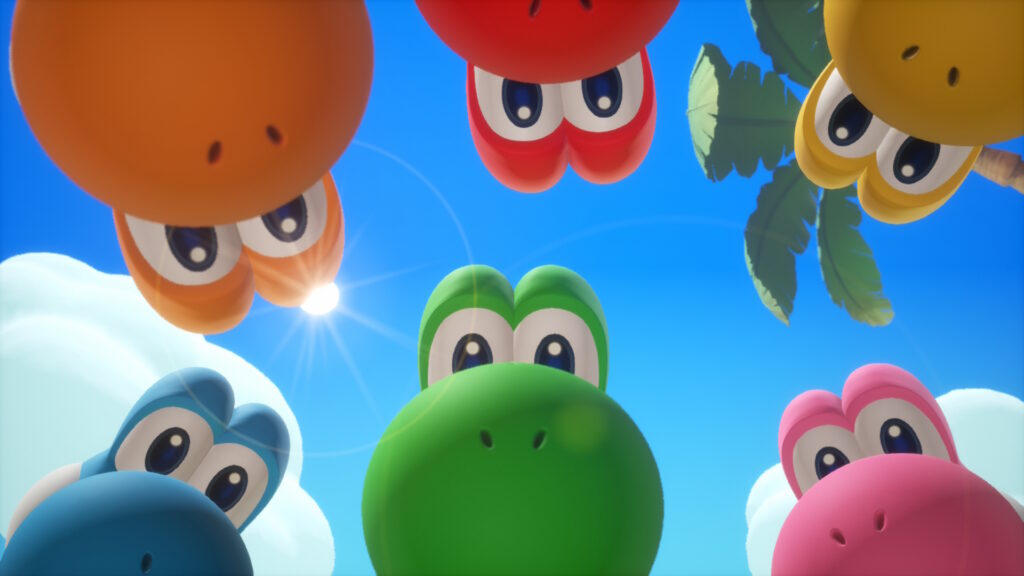
The story is intentionally simple. An ancient magical encyclopedia mysteriously appears on Yoshi’s Island, and after Bowser Jr. becomes trapped inside its pages, a group of colourful Yoshis decide to investigate only to unravel a little mystery along the way. Using a magical monocle attached to the book, they discover that every chapter contains living creatures and miniature worlds within the creatures themselves, which then fill out the book’s content glossary. In order to rescue Bowser Jr. and uncover the secrets of the book, the Yoshis must explore its chapters and learn how the strange inhabitants of each page interact with their environments.
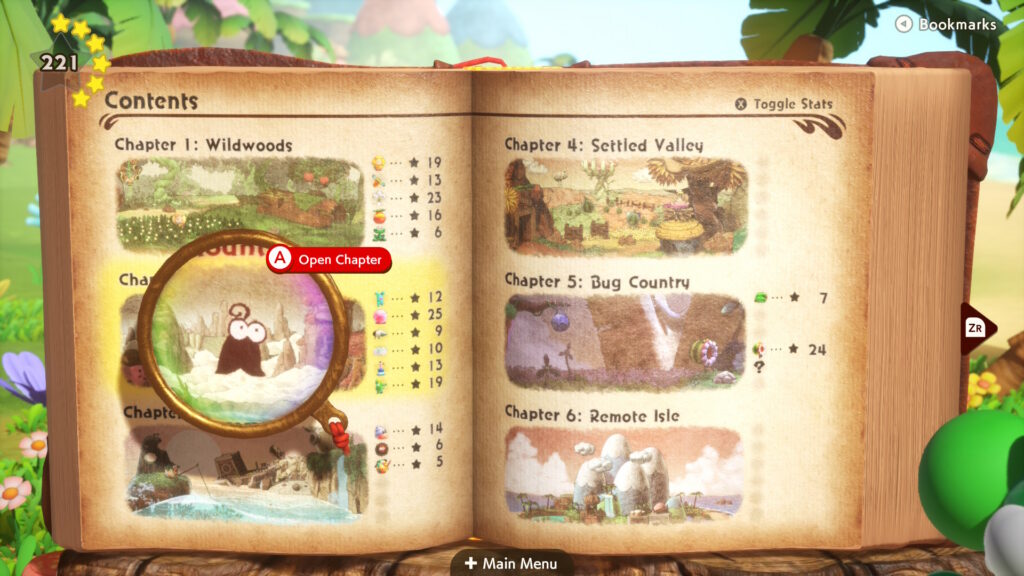
The game’s structure is unlike any traditional Yoshi game. Rather than progressing through linear stages from left to right or start to finish, you’re exploring uniquely environmental storybook chapters filled with different creatures that contain some rather unique puzzles. There are the usual levels of forests, mountains, valleys or bug-filled habitats. Every creature you discover effectively acts as its own level, inviting you to experiment and uncover or should I say, discover unique gameplay moments. Kinda like how you discover unique moments in pokemon snap, it’s all within the environment.
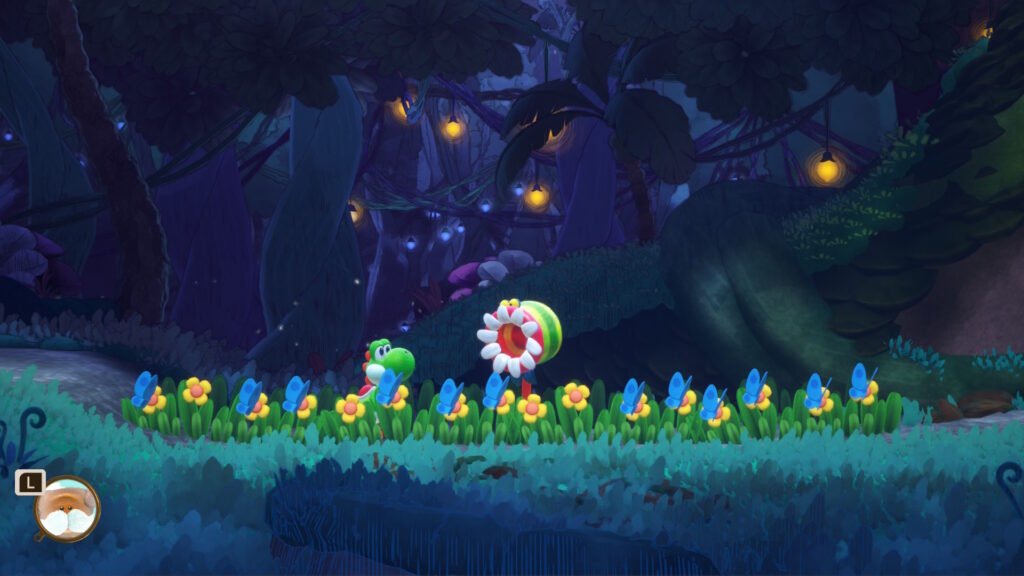
Once you enter a page, the game transforms into what feels like a miniature sandbox. Your goal isn’t necessarily to reach a finish line, although there is an ‘end goal’. However you’re tasked to observe, interact and discover. Every level contains a series of stars that can be earned through these experimentation moments. Maybe you’ll restore a character’s singing voice, create music from environmental objects, feed a bug a chilli to change its behaviour or place an item somewhere unexpected to trigger a new reaction. The gameplay loop is all about rewarding curiosity even if it is as simple as moving one item to a certain spot.
As you collect stars, you unlock additional chapters and new creatures to investigate. Tokens found throughout the game can also be spent on hints, which gradually reveal how to earn any stars you’ve missed. It’s a very simple system because it never leaves you completely stuck. If you’re unsure how to solve a particular puzzle, the game doesn’t really gently nudge you in the right direction, it basically outright gives away the answer. The challenge meter bar is set so low.
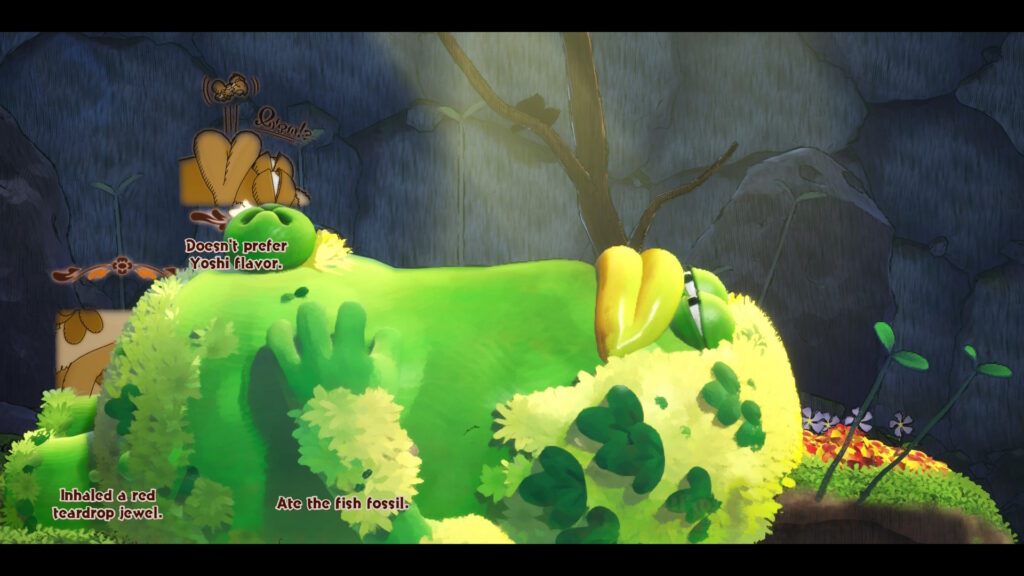
Which surprised me the most. I couldn’t quite understand why there is little to no pressure the game places on the player. There are no real difficult platforming sequences, no real fail states and very little danger. In fact, I’m not entirely convinced there’s even a traditional game over screen. That’s not necessarily a criticism, but it does make the game feel more like an interactive storybook than a conventional video game, it exists just for discovery and filling out the pretty pages.
Visually, the game is absolutely beautiful. Nintendo has fully committed to the storybook concept, and every page feels like a living illustration. The environments burst with colour, the animations are wonderfully expressive, and everything looks like a hand-drawn children’s book brought to life. Whether you’re playing handheld or on a television, the presentation is consistently impressive.
The soundtrack complements the visual style perfectly. The music is calm, relaxing and charming throughout, helping reinforce the cozy atmosphere. The attention to detail in animation and sound design is commendable, it’s easy to appreciate the amount of care that went into every aspect of the presentation.
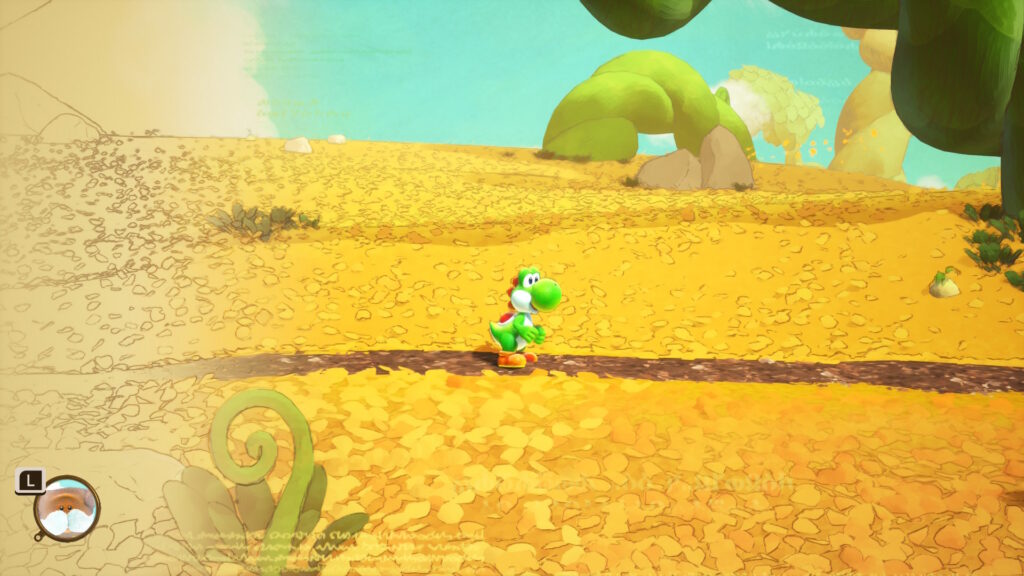
While the journey itself felt surface level deep, there are some interesting gameplay ideas that come from the creatures you unlock which really dive into the proverbial gameplay ocean. Many of these creatures grant unique abilities, effectively becoming companions that ride along with Yoshi. Some create bubbles that let you float, others generate clouds to help you reach higher places, while others provide spikes, fishing abilities or entirely new ways to interact with puzzles. These powers add a surprising amount of variety and depth, making experimenting with each stage genuinely enjoyable.
The problem for me is that while the game is packed with creativity, it sometimes feels limited by its own concept. Once you’ve seen the trick behind a level and discovered most of its interactions, there isn’t always a strong reason to return. The lack of meaningful stakes, a deeper story or traditional progression occasionally left me feeling detached from what I was doing. I enjoyed uncovering secrets, but I wasn’t always motivated to keep pushing forward beyond simple curiosity. My 4 year old also tried his hand at it but found the experience rather muted, initial excitement turned to one of completeness and ready for the next big thing.
That’s ultimately where I land with Yoshi and the Mysterious Book. I admire it more than I love it. It’s original, charming and unlike anything else in Nintendo’s catalogue, but it’s also a difficult game to recommend because I still don’t fully know who its target audience is. It isn’t the traditional Yoshi platformer many fans might be expecting, yet it’s creative enough that I’m glad it exists. While it wasn’t entirely for me, I’d still like to see Nintendo continue experimenting with ideas like this in the future. Perhaps with a little more depth and a stronger sense of purpose behind the adventure.

