
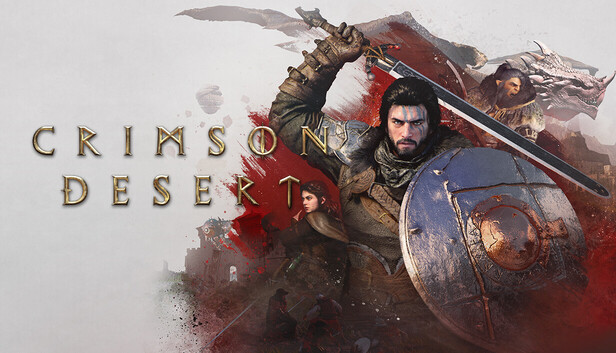
The moment I bumped into an NPC, knocking over their basket of fruit, only to see them fill it back up piece by piece, I knew this level of attention to detail would make Crimson Desert special. After nearly 100 hours, I can say with confidence that this is one of the best games I’ve ever played. That doesn’t mean it’s without its faults, nor does it mean everyone will feel the same.
What Crimson Desert does better than most is something I didn’t realise I’d been missing – freedom. There are no arrows to guide me, no narration from Kliff telling me what to do, nor any NPCs explaining how systems work. Exploration focuses on trial and error rather than holding your hand throughout, a refreshing change from modern games.
This has one drawback: Reaching puzzles and being unable to solve them, not due to a lack of determination, but a lack of the necessary skills (focused force palm, for example). In these moments, I wish Crimson Desert would guide me slightly, letting me know I need to unlock additional abilities. Thankfully, this only happened a handful of times, far from an overbearing issue.
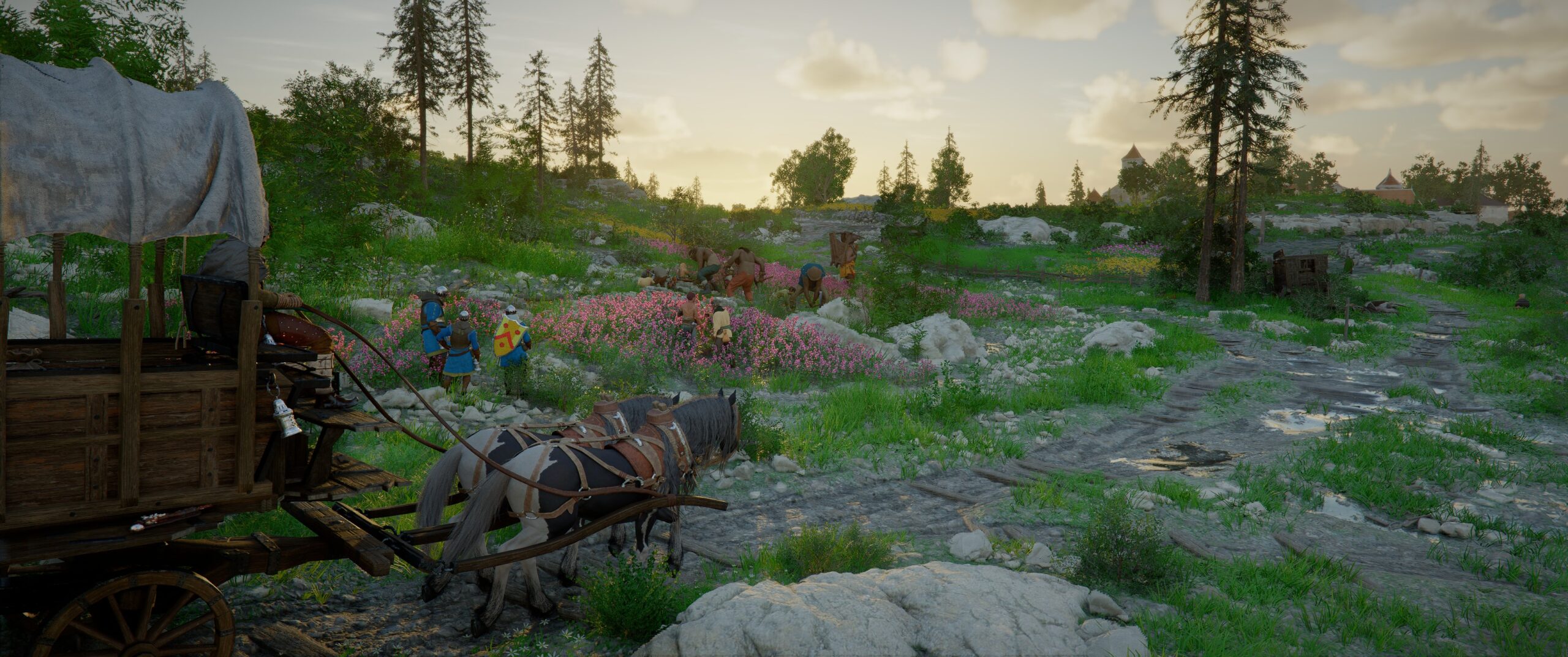
One moment that stuck with me occurred while exploring the outskirts of Hernand. I came across a forgotten castle with a strange contraption and only vague hints to get it working. Later, this became a quest location, but being able to discover and interact with it naturally, rather than being locked out or told “you can’t do this yet”, felt liberating.
In the same area, I found a boss dealing heavy poison damage. No matter how much food I used, I wasn’t going to survive without better gear, so I left and kept exploring. Eventually, I found a piece of gear nearby that negated poison damage. Again, this came naturally through exploration, not because the game pointed me toward it.
While this freedom is something I’ve missed, there are comparisons and issues worth mentioning. Crimson Desert feels like a mash-up of many games before it, delivering systems reminiscent of each, while mastering none. It attempts a lot, and even if not all of it lands, the “it’d be cool if you could…” thoughts are where it shines.
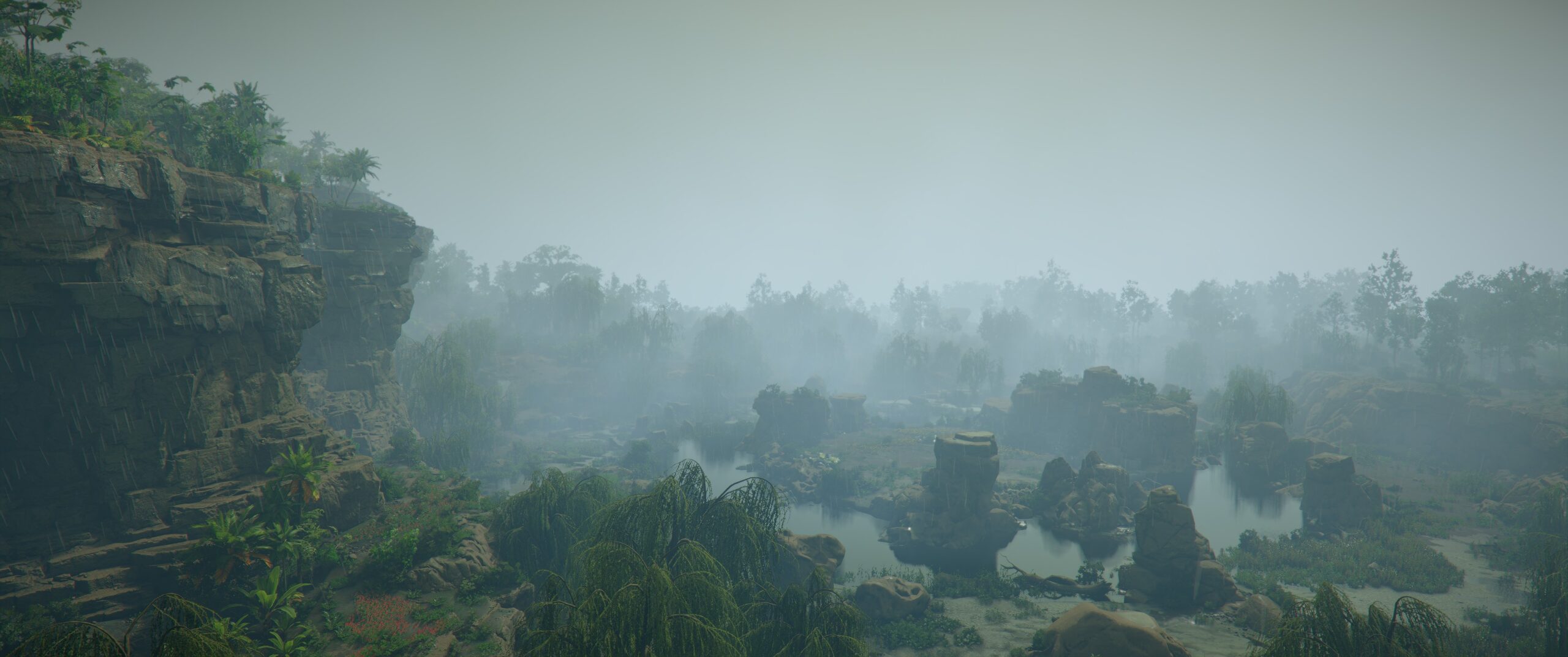
To paint a clearer picture, the world design is most reminiscent of The Witcher 3: Wild Hunt, cities and villages filled with NPCs, vast landscapes, dense forests, and mountains packed with enemies, quests, and secrets. Exploration brought back the same curiosity I had in Red Dead Redemption 2, never quite knowing what I’d find next. However, while the world is beautiful and full of activity, it doesn’t connect to the story in the same way. It feels like a place you exist in, rather than one built around you.
Combat feels like a toned-down Souls-like (or WWE with the right skills) without iframes, but it takes too long to open up. Early on, you’re stuck with a limited skill pool, making encounters repetitive. Thankfully, abilities can be learned through investment or observation, and once unlocked, alongside Abyss Artifacts, combat improves significantly.
Boss design is often rewarding, testing your understanding of skills and how they interact (unless you rely on food to heal and Palmer Pills to respawn). That said, some fights can be frustrating. Survival often comes from preparation rather than mastery, but once you learn to block, dodge, and use the right equipment, combat becomes far more dynamic.
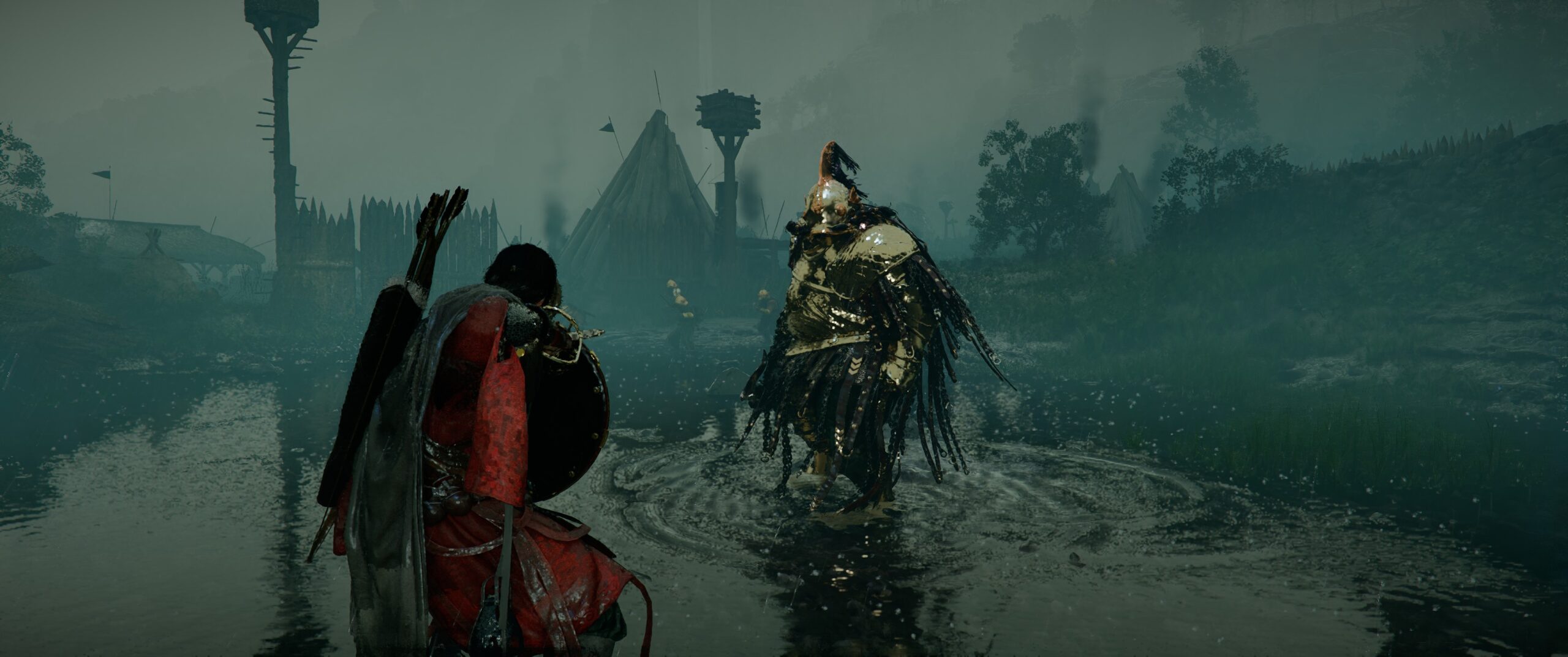
Story and questing are most comparable to Black Desert Online. The Greymanes storyline is serviceable; we’re shown that the Black Bears are enemies and told the Abyss exists, but none of it leaves a strong impression. Side quests lean heavily toward fetch tasks, tutorials, or system unlocks. While there are a few standouts, like Shakatu or the bounty target who thinks he’s a bear, compared to The Witcher 3: The Wild Hunt and Red Dead Redemption 2, very little feels memorable.
The Goldleaf Merchants questline involving identifying a traitor highlights this perfectly. Being able to accuse the wrong person, leading to consequences like an ambush, would have made it memorable. Instead, it feels like filler, with little connection to the characters or outcome, as you cannot accuse the wrong person.
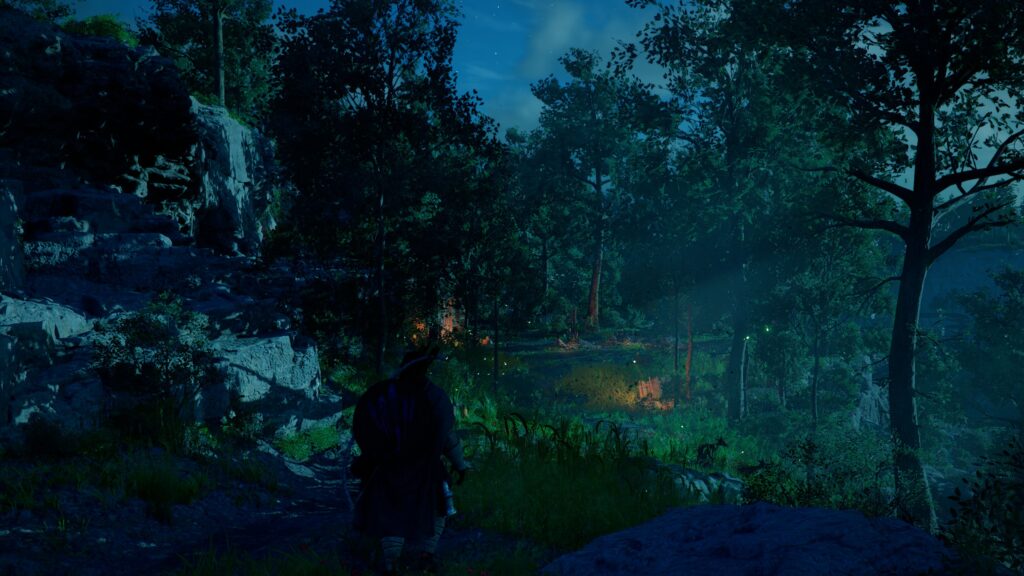
The opening hours are some of the weakest I’ve played. It feels like a disconnected series of tasks designed to show what’s possible rather than something engaging. I usually enjoy learning by doing, but here it isn’t fun. Arm wrestling with repeated dialogue, rescuing a cat without understanding pets until later, or cleaning a chimney for a one-off mechanic, it all feels scattered and pointless.
The Greymane questline reflects this most, playing out like a checklist of tutorials. I was taught systems I had already discovered, including gambling (twice) and pets, after already having one. While it unlocks useful mechanics like farming and housing, the delivery feels like a chore.
Despite this, the systems themselves are where Crimson Desert stands out. It constantly invites experimentation. It genuinely feels like if you can think it, you can try it. Discovering you can cook meat with focus or release insects to frustrate NPCs, small details like this engage my curiosity.
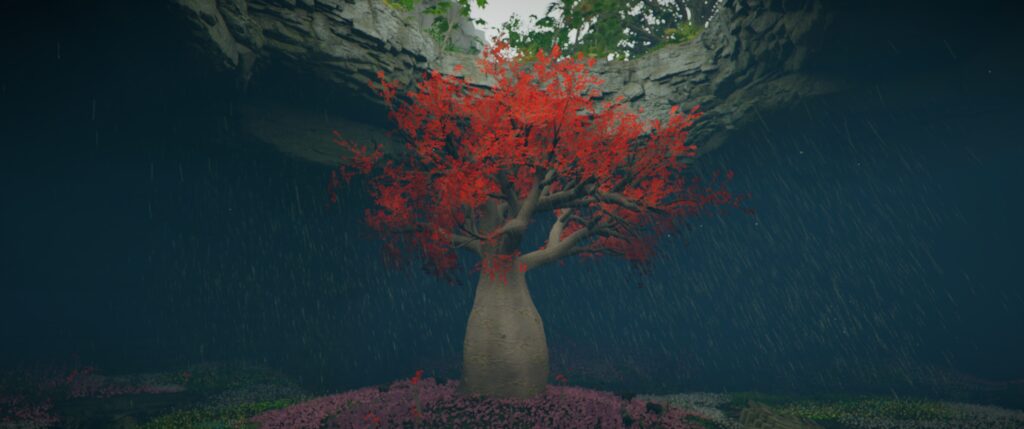
The best part is how natural it feels. NPCs carry fruit baskets that can be knocked over, with each piece picked up individually. Pets can steal food if they’re quick enough, else they get told off by the NPC.
Birds, fish, and insects interact naturally with the environment. Goats roam mountainsides, horses roam plains, and for whatever reason, I saw emus in snowy regions. Despite being a fantasy setting, it feels like a living world, one you exist in, rather than one where you’re the main character.
This is also where cracks begin to show. Systems aim for immersion, but consistency isn’t always there. Kliff can recognise a bowl or rake, but not a broken one, nor basic items like eggs, meat, or water (until inspected).
Similarly, bounty targets disappear after cutscenes despite being shown locked in cages. Small issues, but noticeable in a world that otherwise pays attention to detail. Repeated dialogue while transporting targets also becomes grating, breaking immersion.
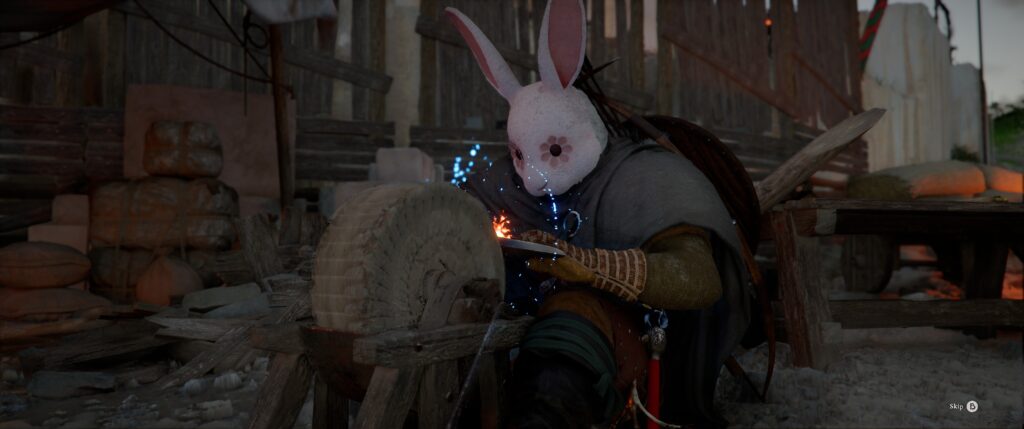
Bugs are present, as expected in a game of this size. I experienced one crash in 100 hours, but UI issues were more frustrating, including one where the UI disappeared after opening the map, forcing a restart. Another issue involved missing player audio. Thankfully, this was occasional rather than the norm.
Performance, however, is excellent. Whether overlooking mountaintops, exploring stormy oceans, dense foggy forests, or fighting large groups with heavy effects, performance remained stable across both ultrawide and 4K. Load times were also impressively fast, which, again, for a game of this size is impressive.
I can tell Crimson Desert started life closer to an MMO, and I think that’s part of why it works for me. I’ve always wanted something like Black Desert Online as a single-player experience, and this is the closest I’ve seen. It throws you into a world and lets you figure things out on your own.
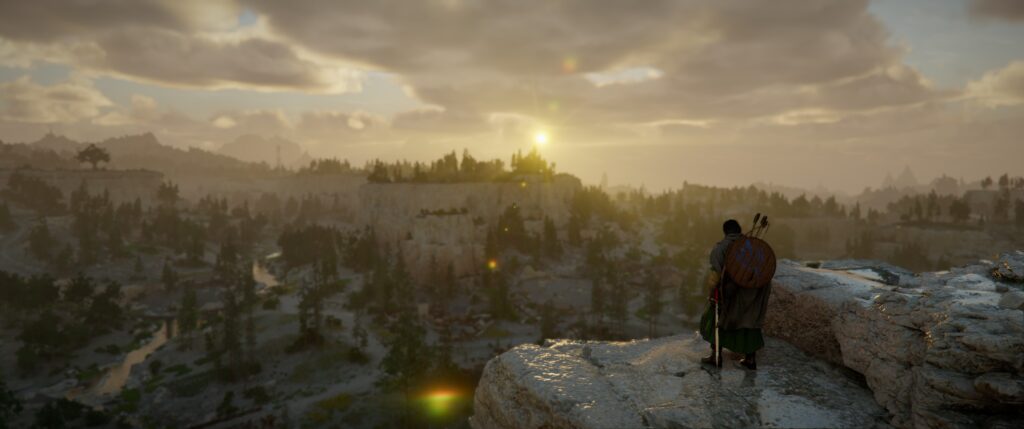
Despite its flaws, such as weak storytelling and questionable design choices, Crimson Desert delivers something many modern games don’t: a sense of discovery. It may feel like a jack of all trades, master of none, but the freedom it offers more than makes up for it.
If you’re looking for a tightly crafted narrative or perfectly balanced systems, this may not be for you. But if you want a world where you can explore, experiment, and create your own experience, this is one of the most engaging games I’ve played in years. I can easily see myself spending hundreds more hours in it if things remain consistent.
Crimson Desert gave me what I’ve been missing from modern gaming. It brought back a sense of awe and curiosity from my younger years. It isn’t perfect, but it achieves something many games don’t.
CRIMSON DESERT REVIEW
Crimson Desert focuses on freedom first and everything else second, and that’s what makes it special. The lack of handholding, the absence of “yellow tape”, and the freedom to experiment brought me back to a time when I didn’t rely on guides or optimisation. Not always knowing if I was doing the right thing made the experience more engaging, not less.
PROS
+ The world is visually breathtaking
+ Filled with much more content than I expected
+ Focus on sockets in gear for abilities rather than raw stats
+ Lacks the “yellow tape” found in many modern games
+ Unrivalled freedom, enabling creative and engaging gameplay
CONS
– Many of the quests are low quality
– The only thing lower quality than the quests is the story
– Playing with mouse and keyboard was tedious, and I highly recommend using a controller
Reviewed on PC. A review code was provided by the Publisher for purposes of this review.

