

It’s hard to talk about Donkey Kong Bananza without first acknowledging the legacy of Nintendo and, more specifically, the history of Donkey Kong himself. The last major 3D Donkey Kong platformer was Donkey Kong 64 back in 1999, which marked a pivotal moment for the franchise. Now, over two decades later, Donkey Kong Bananza arrives, developed by the same brilliant team behind Super Mario Odyssey, one of the most refined platformers in Nintendo’s history.
After such a long wait since the golden era of Donkey Kong Country and its sequels, the big question is: does Bananza live up to the hype? The short answer is yes, completely. This is a game that doesn’t just aim to entertain. It reaches a level of innovation, polish, and pure joy that few titles ever truly achieve. It grabs you from the first banana and doesn’t let go.
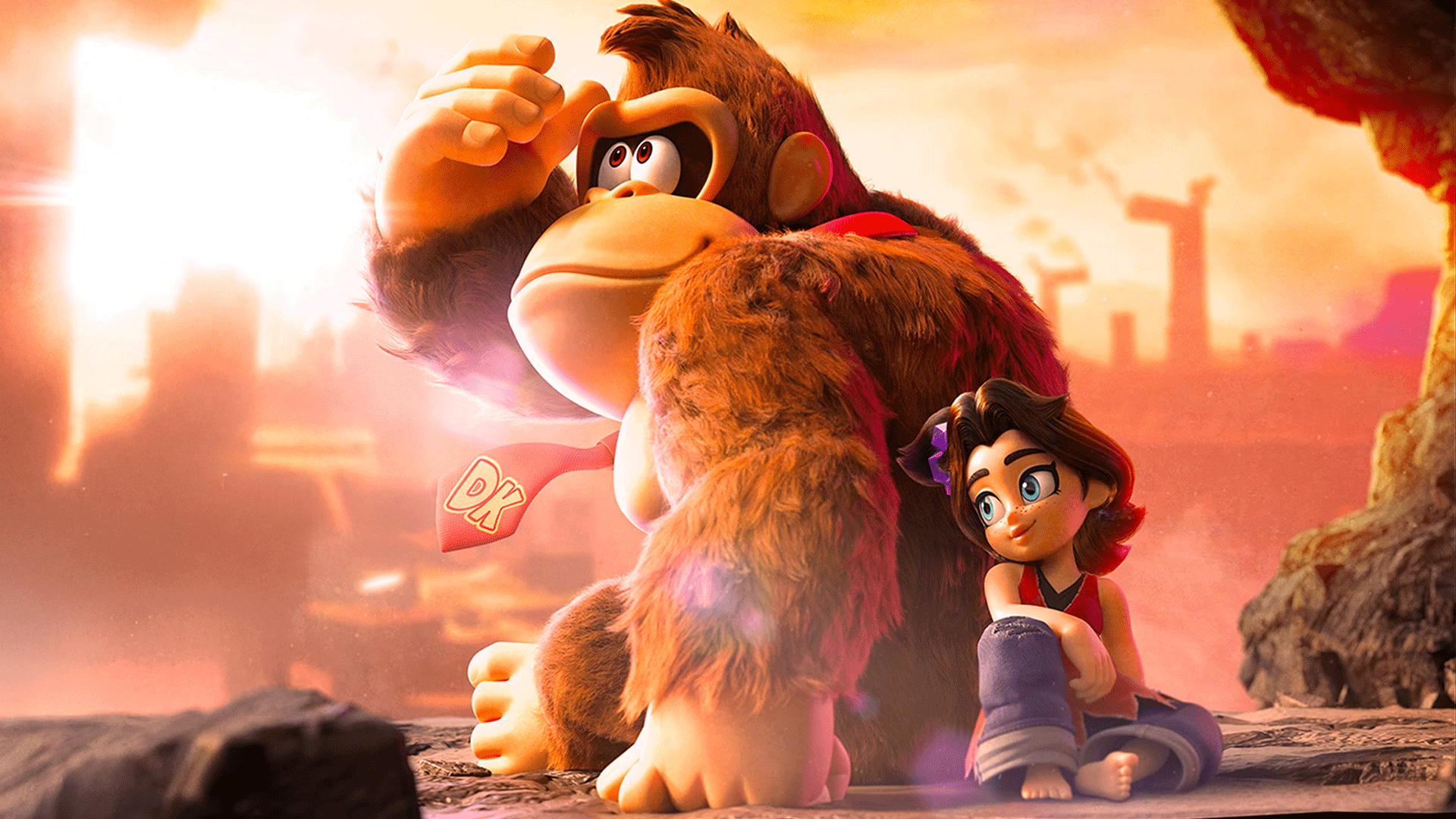
The story begins in typical Donkey Kong fashion, with some missing bananas that lead you on a journey to meet a mysterious rock. Riveting stuff. That rock quickly turns into none other than Pauline, who joins Donkey Kong on a wild subterranean adventure to track down Banandium Gems deep within the planet’s core. The only thing in your way is the evil Void Kong leading his lackeys in search of the elusive Banandium Root, which is rumoured to grant wishes. Void Kong wants power, and Pauline simply wants to return to the surface. Donkey Kong just wants more bananas. Simple.
While the story isn’t the main draw of the game, it serves as a sweet backdrop to a surprisingly heartfelt journey. Watching the relationship between Pauline and Donkey Kong evolve, starting with hesitation and fear that grows into genuine affection, feels like something out of a Pixar film. Their bond becomes a highlight over the game’s 30-hour playtime, and it’s absolutely charming.
What makes Bananza truly special is how it transforms expectations. What could’ve been a simple terrain-smashing, banana-hoarding romp turns into something far more thoughtful and polished. Punching through environments is immensely satisfying, but it’s the way the game constantly evolves that makes it shine. As you dig deeper through the planet’s 17 distinct layers, each new area introduces a unique gameplay mechanic. Every level teaches you something different, expanding your understanding of how this platformer operates not just by the rules set by past games like Super Mario Odyssey, but by redefining what the genre can be. A genre that Nintendo themselves created.

Despite the bashing chaos, the controls are impeccably tight. Platformers live or die by how responsive they feel, and Bananza excels in this regard. Like Astro Bot or Odyssey, there’s a clear rhythm and purpose behind every jump, punch, or surf. Early on, I questioned whether the game would just be about smashing rocks and collecting items, but the deeper I went, the more the game revealed itself. You’re encouraged to keep going, to keep exploring downward, and the design always rewards your curiosity. If I had any recommendation to make, it is don’t fret too much about the beginning levels, just keep moving, and you’ll understand the pace of the game.
While terrain bashing is the game’s most recognisable mechanic, smashing through dirt, sand, stone, and everything in between, it’s far from the only thing Bananza has to offer. The game introduces a wide variety of elements and systems tied directly to terrain interaction. As you progress, you’ll encounter puzzles and challenges that require a deeper understanding of how different surfaces behave and how they interact with enemies, hazards, or even each other. What makes this so effective is how the game teaches you organically. It doesn’t throw everything at you at once. Instead, it introduces new ideas gradually, encouraging experimentation through trial and error.
Throughout the game, you’ll unlock five powerful Bananza Skills, such as Kong, Zebra and Ostrich, each with its own theme song and unique abilities. These transformations are incredibly fun and, at times, hilariously overpowered. They also open skill trees you can invest in using points earned by collecting Banandium Gems, aka Bananas. These are hidden everywhere, buried underground, perched on mountaintops, tucked into unreachable corners, and while you don’t need to collect them all to progress, you’ll almost certainly want to. They’re addictive. Once you find one, you’ll want ten more. It’s that kind of game.
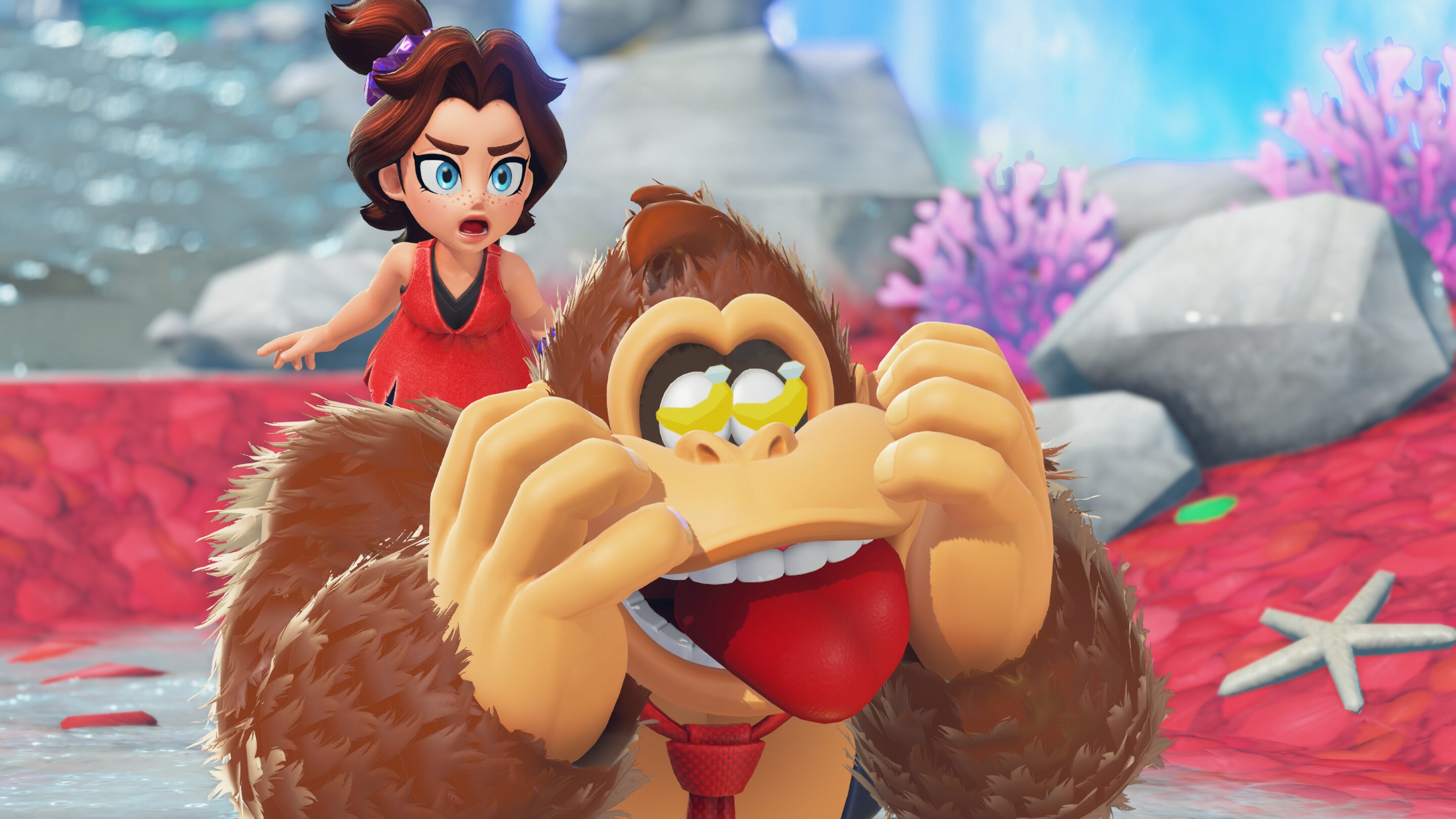
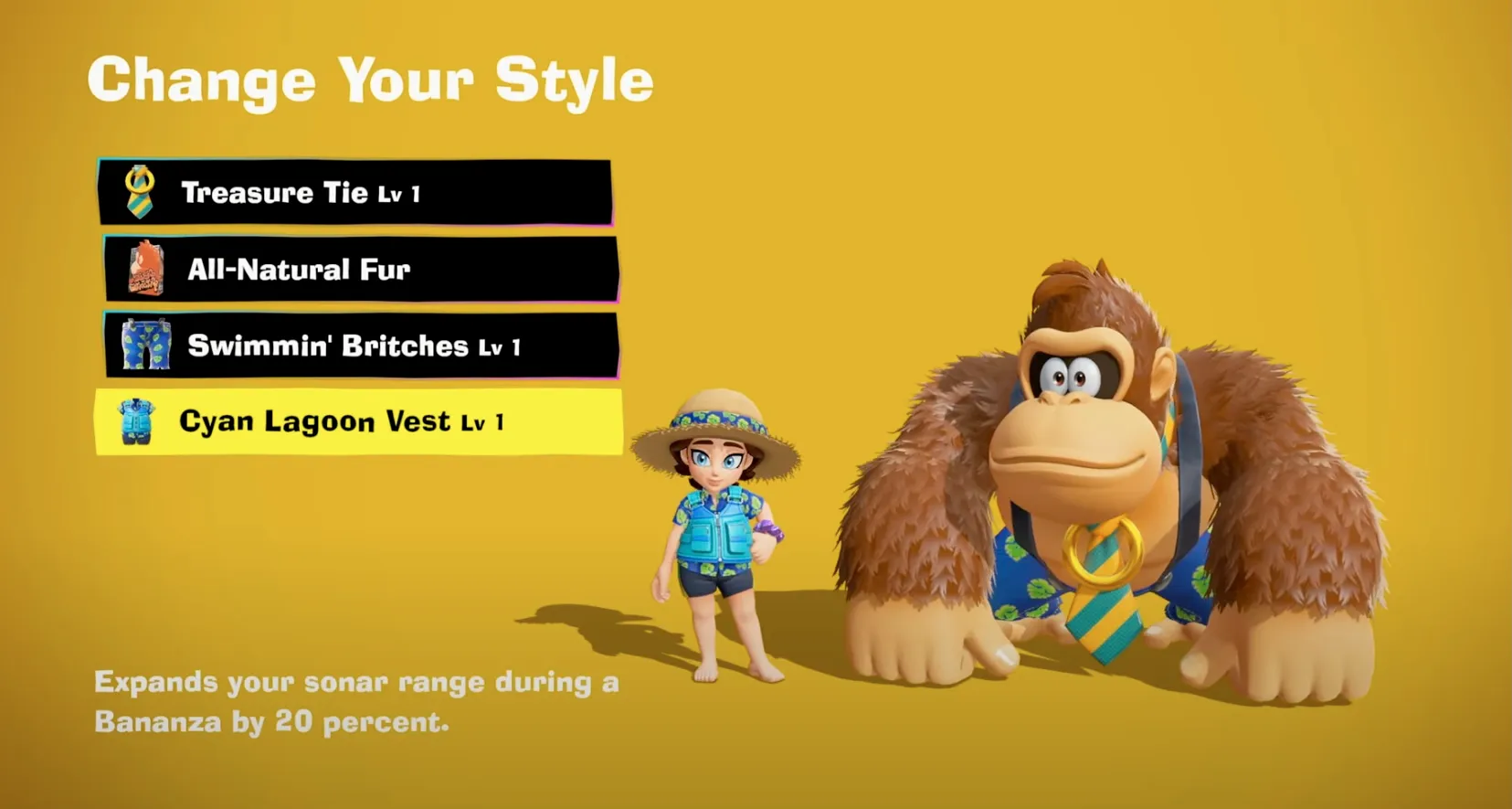
The destruction mechanics, surprisingly, don’t undermine the platforming precision. In fact, they complement it. The game may look messy and chaotic at times, but it feels tailor-made for Donkey Kong’s brutish charm. There are also fossils to find, which can be traded for cosmetic items with their own benefits for both DK and Pauline. Between skill trees, outfits, and unlockables, there’s a satisfying, addictive loop of progress. There was one evening I was playing, thinking I would quit at the reasonable time of 11:30 pm. I figured that would give me enough time to get some decent rest as I had work the next day. I was collecting bananas and fossils, none the wiser, only to quickly glance at my phone and realise that it was actually closer to 02:00 am. Work was not fun the next day.
Technically, the game runs beautifully most of the time with a consistent 60 frames per second. Donkey Kong’s new design is fantastic, expressive, lively, and packed with personality. He reacts to everything with a kind of animated exuberance that makes it hard not to love him. The levels are beautifully designed and are almost faultless in their execution, and how they’re created, they are of course themed as most platform levels are, but the way that they’ve combined these with the unique concepts and ideas makes some very memorable. My favourite level comes near the end, reminiscent of everyone’s favourite takeaway food: burgers and fries. The way that they’ve integrated this simple concept as a level shows you Nintendo being fantastic with what they usually do, that is, to be uniquely original while also showing you what creativity can achieve.
I did run into a few framerate drops during intense scenes, particularly mid-game and during the final boss fight. It didn’t ruin the experience, but it was noticeable, especially for a game that stands as one of the biggest titles on the Switch 2, this is not a great start to the console’s life cycle, especially in its infancy. Add in some pop-in textures to distant assets, which made me slightly worry about the power of the Switch 2.

I played both docked and in handheld mode. I would say it was roughly half-and-half between the two. It looks stunning on the big screen, as you’d expect, but it also holds up beautifully in handheld. Motion controls are still present in subtle ways, such as aiming or adjusting your perspective by quickly flicking the handheld, and they actually enhance the gameplay rather than feeling tacked on.
Scattered throughout the world are optional challenges and puzzles, many of which are clear tributes to Donkey Kong Country. They’re clever, satisfying, and escalate in difficulty at a great pace. What’s even more impressive is the love and respect the game shows for its history. References, easter eggs, and callbacks to the franchise’s roots are everywhere. It’s a full-on love letter not just to Donkey Kong, but to the platforming genre itself.
The NPCs are another unexpected delight. They’re full of personality and often react to your actions in dynamic ways. One might say they’re going fishing, only for you to destroy their boat by accident. Next time you see them, they’re in the water, saying they “never wanted to fish anyway, swimming was much more fun”. These tiny, unprompted moments don’t serve any mechanical purpose, but they add a layer of humour and heart that enriches the world.

Sound design in Bananza is phenomenal. From the satisfying “BANANA” of banana pickups to the booming punch effects and decent voice acting, every audio element enhances the experience. The soundtrack is a standout. There are nods to classic Donkey Kong Country tracks, but the original compositions are just as memorable. One level in particular, The Divide, features a track so unexpected and atmospheric that it completely changed how I felt while playing. It’s not something I expected from a platformer, and yet it felt perfect at the time.
Control-wise, the game offers surprising depth. Every action feels responsive and deliberate, whether you’re executing combo punches or navigating tricky platforming sections. While some players have reported issues with the camera, particularly in deeper underground levels, I personally only had minor hiccups, maybe five minutes total over 30 hours. The game gently teaches you to trust it, to follow its design, and in return, it delivers consistently smooth gameplay.
It seems to be part of Nintendo’s new design philosophy lately: let’s give players complete freedom over how they approach gameplay. Rather than tightly guiding you from point A to B, they offer sandboxes filled with tools, systems, and opportunities, then step back and let you play. Tears of the Kingdom embodied this idea beautifully, and surprisingly, so does Donkey Kong Bananza. It’s strange to say, but Zelda and Donkey Kong now share core design values. If this shift represents Nintendo’s new direction, we’re in for an incredible era of innovation. I can’t help but wonder what the next Super Mario will look like under this philosophy.
While I’ve already praised the game’s level design and visual beauty, one area that felt underwhelming was the boss battles. Most of them are far too easy, and they rarely present a real challenge. That said, the game steadily improves the longer you play. It’s almost baffling how it continues to get better as it goes. The bosses may not disrupt the experience, but I wish they had offered something more meaningful or memorable. Still, by the midpoint, the game somehow finds ways to raise the bar again and again.
That’s what makes Bananza stand out. It’s easy to assume from the outside that it’s just about smashing everything in sight. The beauty of the game lies in how it allows you to play the way you want. If you want to brute force your way through, you can. But if you take the time to explore the systems, experiment with mechanics, and understand how the environment responds to you, you’ll find a surprisingly deep and flexible experience. It’s not about what the game is. It’s about how freely and intelligently it lets you play.
In the end, Donkey Kong Bananza is more than just a comeback. It’s a triumph. Much like Breath of the Wild or Super Mario Odyssey, it reimagines a classic character for a modern audience with creativity, confidence, and magic. It’s not often that a game hooks me like this. Minutes become hours. The urge to collect everything becomes overwhelming. And just when you think the game has shown you everything, it reveals one final surprise. The last few hours were so powerful and immersive, I forgot I was even playing a Donkey Kong game, and that’s a feeling few games can deliver.

