

I’ve never played a Rune Factory game before, although I have heard many things about the franchise. It’s a beloved JRPG franchise that blends fantasy role-playing with farming and social simulation. The series originally spun off from Story of Seasons, formerly Harvest Moon, which I played and enjoyed quite a bit back in the day. As an older gamer, Harvest Moon held a special place in my heart, though it eventually made way for the extremely popular and fantastic game Stardew Valley, a game I’m sure everyone has heard of or played.
What makes Rune Factory stand out is how it combines life-sim elements with dungeon crawling and some really fun combat. That mix is fairly unique, akin to the mentioned Stardew as well as the extremely popular Persona games. The franchise has always intrigued me, and now, after finally playing Rune Factory: Guardians of Azuma, I can confidently say this game was one of my biggest gaming surprises of the year.
If you’re someone who loves the diverse genre that Rune Factory has to offer, or you’re just someone who appreciates games with a hell of a lot of depth, I highly recommend it. It’s the perfect kind of game to play on Nintendo Switch 2. It’s easy to pick up and put down, yet dense enough to keep you hooked. While longtime fans of the franchise might find some aspects familiar, as a newcomer, I found myself genuinely impressed.
The story in Guardians of Azuma is relatively simple, with some moments of intrigue and exposition. You start by choosing either a male or female protagonist and are introduced to the world of Azuma, a floating realm reminiscent of The Legend of Zelda: Skyward Sword. The main goal is to travel between villages and many lands, usually represented by the seasons. Spring, Summer, Autumn, and Winter. The goal is to quite simply bring them back to life. These arcs can take as long or as little as hours each, depending on your playstyle, and only after completing them does the central plot truly begin. It’s a slow burn, but that’s not a flaw. If anything, it allows Rune Factory: Guardians of Azuma’s incredible depth to shine. In the end, what you put into it, you get out of it. I was speed running as much as I could, but I couldn’t stop myself from getting heavily involved with the dense game mechanics on offer.
This depth is divided into what feels like four main gameplay pillars, each one large in its own right.

Firstly, the combat is genuinely fun. It’s real-time action RPG combat that manages to be both accessible and deep. You’re not stuck with one fighting style. You can switch between dual blades, long swords, short swords, ranged weapons, and more. Each has a different feel and strategy towards its use. Dual blades are fast and flashy. Long swords hit like trucks but come with a long wind-up. If you know your JRPGs, you know the drill and what to expect.
What impressed me most is how every weapon category has its own progression path and skill tree, as well as upgrade options. You’re rewarded for sticking with one type but also encouraged to experiment. Special weapons acquired later in the game bring unique abilities that can completely change your playstyle, think fire, wind, water, Captain Planet elemental finishers. Combat isn’t just hack and slash either. There’s a nice rhythm to it. You dodge-roll, parry, chain combos, and even have charged special attacks. It reminded me of Ys, mixed with Tales, with just a pinch of Monster Hunter crafting flavour thrown in. It’s fluid, fun, and addictive enough that I’d sometimes delay planting carrots just so I can go back into the open world and get down and grimy with the enemies.
Secondly, farming plays a crucial role. It’s not just a side activity but a core mechanic for reviving each village. I particularly appreciated how streamlined and intuitive it felt, especially compared to other farming sims that get bogged down in tedious micromanagement. A huge tip for those playing on Switch 2: during the farming/building moments, if you play with the Joy-Con sideways, farming takes on an RTS feel, almost like using a mouse on PC. It made everything quicker and more precise, which turned farming into one of my favourite aspects of the game. It’s a game changer. At times, it even felt like I was using Microsoft Excel, so intuitive and smooth.

Thirdly, social elements and relationships add a lot of heart to the experience if you’re into this sort of life/love sim. Each village is filled with unique characters. Many are trope-heavy but still fun to interact with. You can form bonds, romance characters, and recruit companions for your party. Your team can include up to three members, and they each bring their own quirks, personalities and combat abilities. If you’ve played enough JRPGs, you’ll recognise the familiar archetypes. The amnesiac hero. The flirty one. The child with godlike power. The nonchalant, mysterious one. While not groundbreaking, the writing is charming enough to make these characters feel worthwhile. This was my least favourite part, but the fact that you can romance or get to know so many characters on a deeper level is impressive in itself.
The fourth pillar is all about management and progression systems, which are impressively robust. Between inventory management, cooking, crafting, farming, equipment loadouts and upgrades, clothing customisation, and countless skill trees to unlock, the game is jam-packed with content. Almost everything you do can affect combat or daily life. The RPG systems go far beyond what I expected, and that constant progression gives the game an almost addictive quality that makes this game hard to put down. If you’re like me, who enjoys games that let you micromanage and improve on skills and unlock new things, it’s incredibly satisfying.
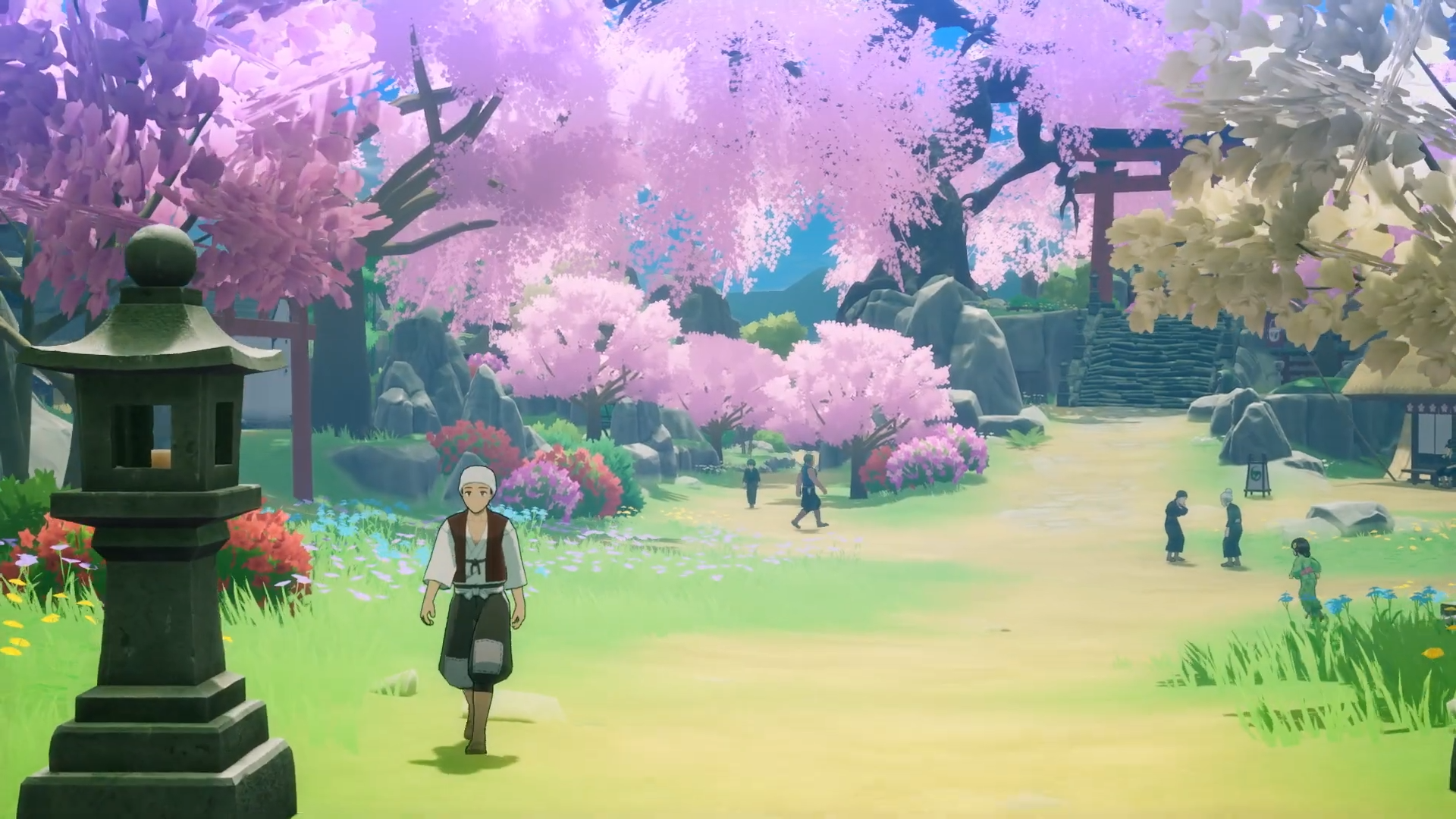
From a technical perspective, Guardians of Azuma runs beautifully on Switch 2, holding a steady 60 FPS throughout most of the experience. My biggest gripe is that Fast Travel did occasionally introduce a few seconds of frame drops on every occasion, but outside of that, performance was smooth. Moving between towns and the open world felt seamless. I’ve seen gameplay on the original Switch, and yes, there’s a big downgrade, but that’s to be expected. If you have a Switch 2 this is the game made for the current gen.
If I had to point out a few weak areas, it would be the music. While serviceable, it’s largely unmemorable. Not bad, but nothing that stuck with me. Additionally, the JRPG tropes. It is not bringing the game or the genre forward into the future. It is a familiar experience through and through; however, there is something undeniably comforting about it. It isn’t trying to reinvent the wheel, but it executed so well that it felt like a warm, familiar meal. Comfort food in the form of a game. Enemy designs also became repetitive as the game progressed. It relied on palette swaps based on seasons. Red enemy becomes blue, blue becomes yellow, etc.
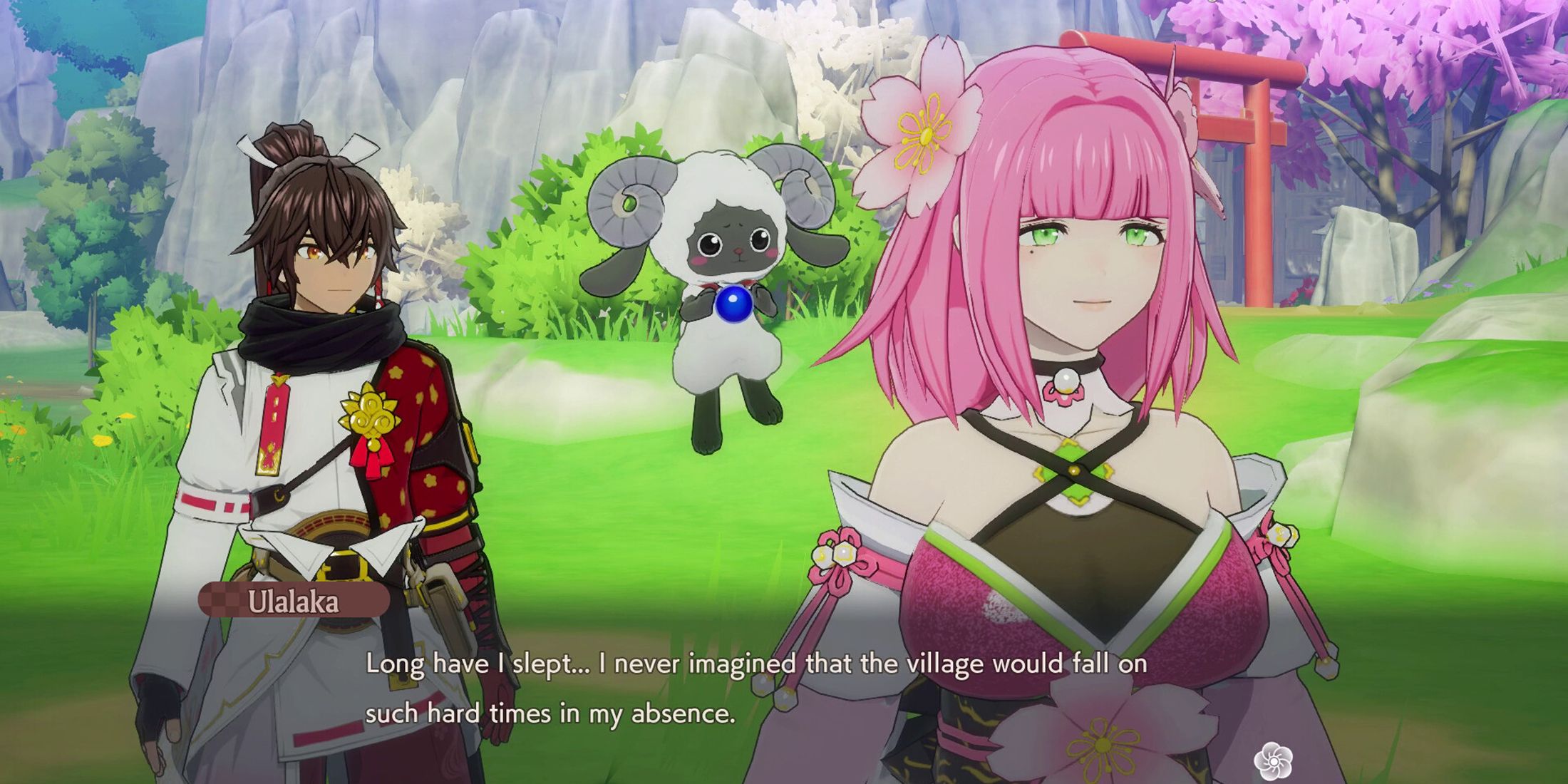
This game is the JRPG equivalent of a thick, cozy blanket and a hot cup of coffee on a cold, rainy day. It’s familiar, comfortable, and relaxing, but never frustrating, your little zen moment for gaming. You’ll find yourself staying up too late because you just want to harvest these turnips and beat that one dungeon. Some might fall in love with the characters you initially thought were walking anime clichés. You’ll craft 12 identical strawberry smoothies just to win someone’s affection, then be left wondering if this is really your life. Turns out it is. And through it all, you’ll enjoy every ridiculous minute of it.
You’ll spend 40 minutes designing the layout of your carrot field because symmetry matters. You’ll fight a dragon, forget why you were fighting, and then remember you were just trying to get a rare eggplant seed drop. And somewhere in all of that, you’ll realise you’ve fallen in love with a game that never needed to reinvent the wheel, it simply planted the seeds of obsession, watered them with old school nostalgia, and harvested pure joy. Not bad for a game that starts by handing you a watering can.

