
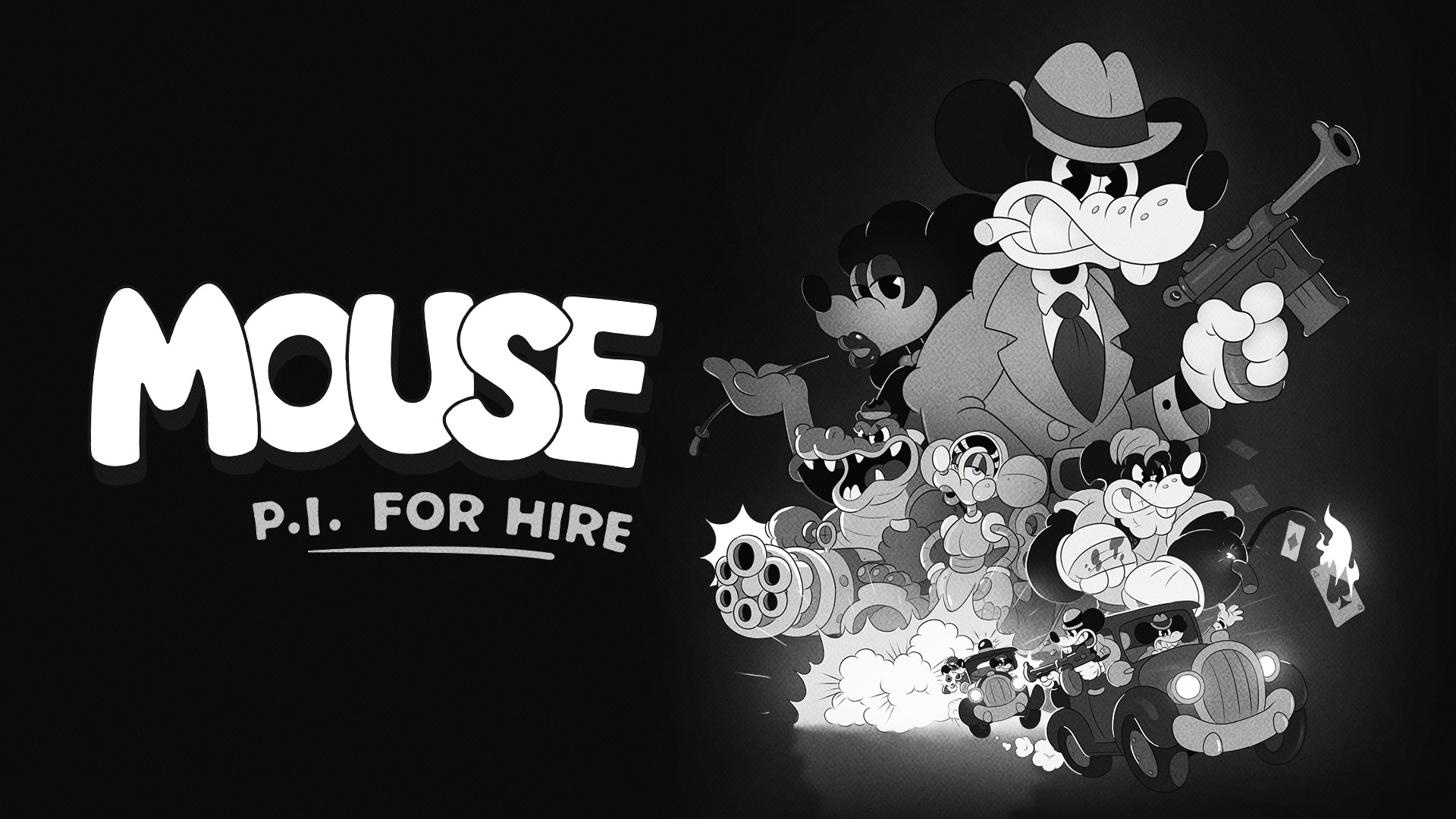
This was honestly one of my most anticipated games of the year ever since it was first revealed. Every trailer made it look visually stunning and genuinely different from everything else coming out. Once you actually start playing it, though, it becomes clear pretty quickly that underneath all the style is a very old-school first-person arena shooter. And when I say old-school, I mean Doom-style old-school, sometimes even peppered by Serious Sam gameplay. Put simply, quick gunplay, enemies that rush you constantly, whilst locked in a room with all you ever need to get yourself out of the mess you’re in. Rinse, repeat, then off to the next area to do it again.
Mouse: P.I. For Hire is one of those games that immediately grabs your attention the second you boot it up. Even before you start properly playing, there’s a surprising amount of settings to mess around with. You can tweak gameplay options, motion sensitivity, graphical settings and even choose between Quality or Performance modes depending on what kind of experience you want. What I found really cool, though, was how much effort they put into the visual filters. You can add film grain and extra effects to make the game look even more authentically 1920/30s, the developers, Fumi Games, have done an outstanding job in creating an old prohibition-era cartoon that’s somehow come to life.
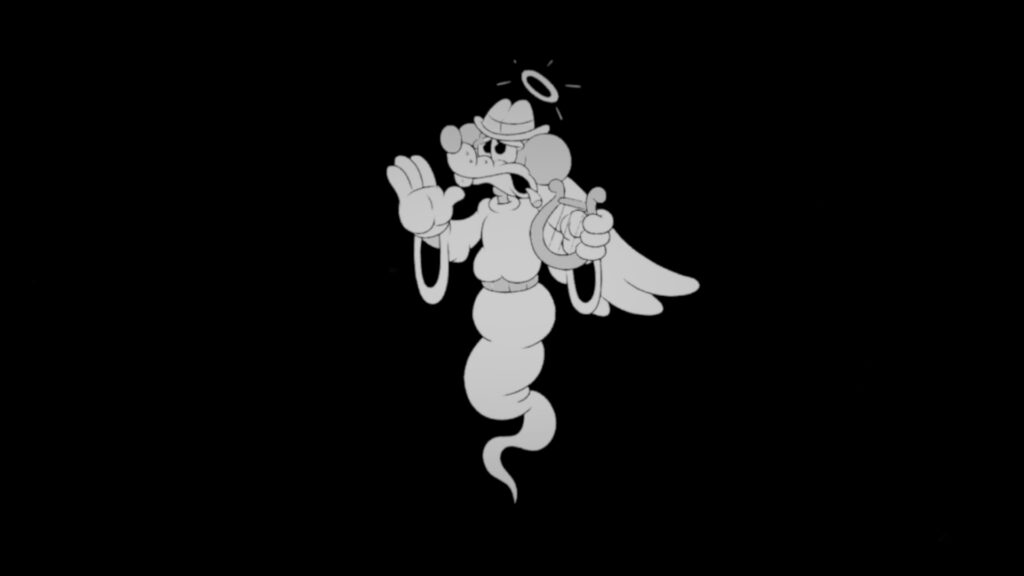
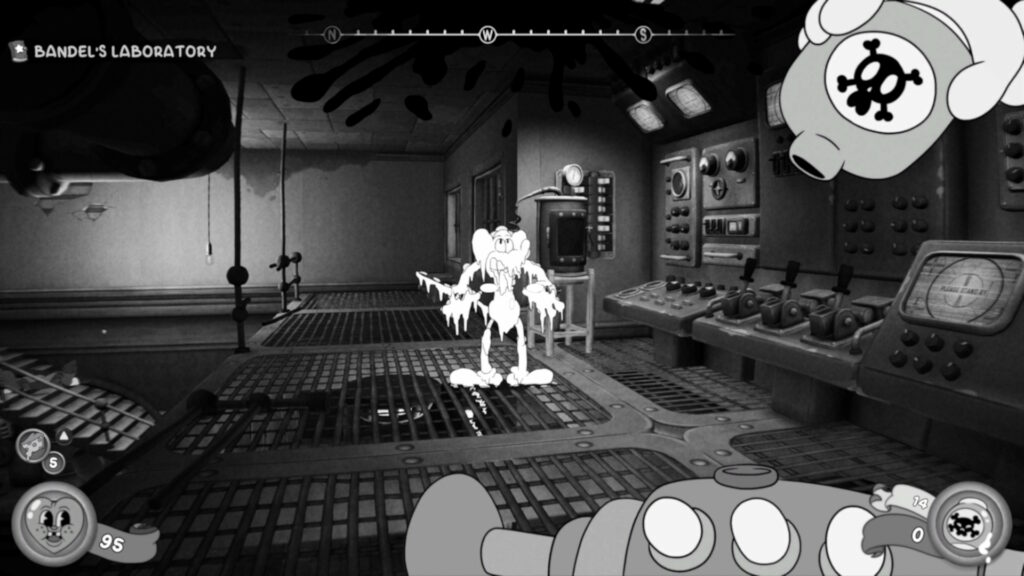
That visual style is easily the game’s biggest strength. Everything about Mouse: P.I. For Hire screams old-school animation. The characters are all hand-drawn, while the environments themselves are fully 3D, which gives the game this bizarre but really striking look that honestly stands out from almost anything else on the market right now. The black and white presentation mixed with the jazz soundtrack and old-time era atmosphere gives the whole game a proper identity. It doesn’t just feel like another indie shooter trying to be nostalgic
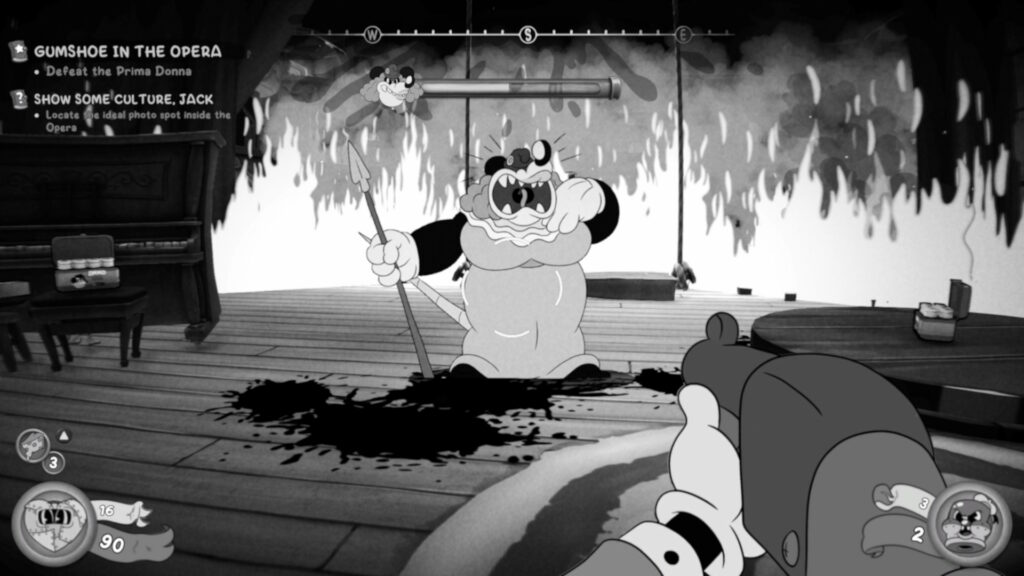
You’ve got double jumps, crouch sliding, melee attacks, and you pack a whole arsenal of weapons that all feel unique. The shotgun feels powerful, it was my number one weapon. The pistol has a satisfying punch to it, and the unique weapons on offer are just so much fun to use. Ammo never really becomes too much of an issue, so the game encourages aggression more than careful survival. Health is handled through tonics and armour pickups scattered throughout levels, which again feels very inspired by older shooters where you’re constantly scrambling around the map trying to stay alive while everything attacks you at once.
And honestly, the game can be pretty difficult depending on what setting you play on, especially on harder difficulties. Enemy AI isn’t that layered, in fact, it’s really simple, and they don’t really “strategise”; they just see you and immediately rush you down. It’s just a constant wave of Mickey Mouse-looking enemies that you’re violently mowing down with frantic fervour. You’re constantly moving, constantly jumping, constantly reacting. Boss fights at the end of levels also mix things up nicely because most of them require different attack patterns or strategies as you smash their health bar down.
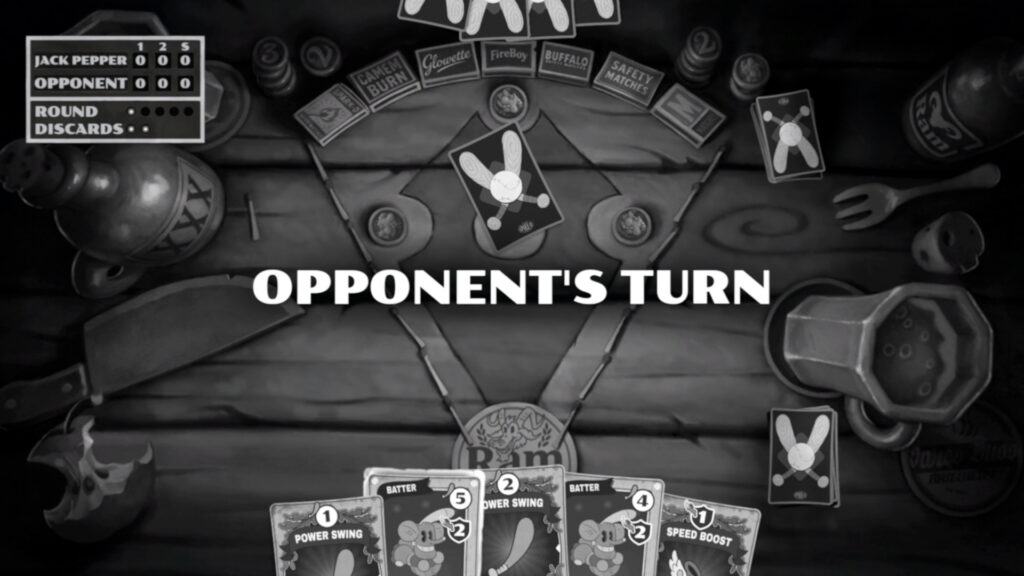
One thing I didn’t expect to enjoy as much as I did was the little baseball card mini-game. It reminded me of a lot of games like The Witcher 3: The Wild Hunt or Final Fantasy, where you suddenly get distracted by some random card game for hours. I don’t even really understand baseball that much, but somehow I still found myself getting weirdly addicted to it.
The music and sound design also deserve a mention because they absolutely nail the atmosphere. Jazz music, muffled audio filters, old radio-style voice effects – everything sounds intentionally aged to match the setting. Sometimes dialogue even sounds distorted, like it’s coming through an ancient speaker system. It adds to the immersion and helps the game feel authentic to its time period instead of just using the aesthetic as a gimmick.
Performance-wise on the Nintendo Switch 2, I did run into a few frame rate issues here and there. Nothing game-breaking, but definitely noticeable during more chaotic moments. I swapped over to higher frame rate settings rather than graphical fidelity, which helped a bit. Thankfully, the art style carries the game hard enough visually that it still looks fantastic regardless.
The story itself is probably where I’m the most mixed. I like the idea of it more than I actually connected with it. The whole noir detective angle fits the setting perfectly, and the dialogue has a lot of tongue-in-cheek humour, or should that be tongue-in-cheese humour? Anyway, you get the idea.
I never found myself completely hooked by the narrative, but that doesn’t mean that you won’t be bowled over by its ratty charm. There are RPG-style dialogue trees during conversations at times, which was odd, though they mostly just exist for extra banter rather than meaningful choices. Still, the voice acting helps carry things a lot. It’s highly publicised that Troy Baker voices the protagonist, and the supporting cast all commit hard to the cheesy noir atmosphere. Everything revolves around mouse puns, cheese references and gangster style slang. It’s ridiculous, but intentionally so, it’s the commitment that is commendable to the style of the game.
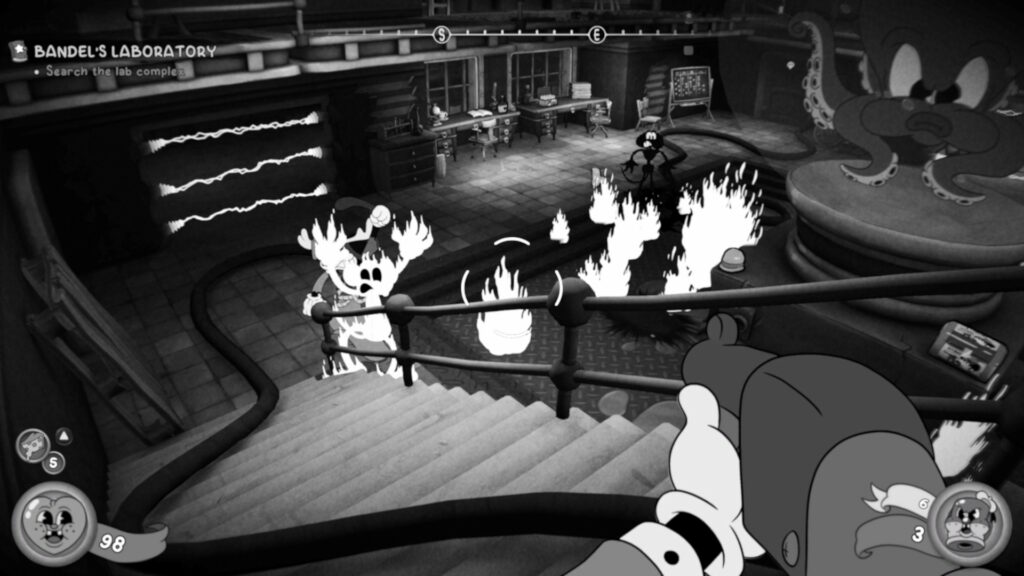
The levels caught me by surprise as I didn’t expect them to be as big as they actually are. They’re not just straightforward corridors where you run from one firefight to the next. There’s a lot of exploration packed within them, with hidden paths, secret rooms and collectibles scattered all over the place. You can find newspapers, comics, cards and all sorts of little extras hidden throughout levels, and the game invites you to constantly check corners and wonder if there’s something hidden behind a wall.
A lot of that level design honestly reminded me of classic Doom. Not just because of the shooting, but because levels actually feel thorough. Sometimes you’ll stumble across an area that loops back around somewhere unexpected or unlocks a completely different path entirely. There’s a proper sense of discovery which I appreciated quite a lot, especially since the gunplay felt very samey very quickly.
All of the collectibles and clues you find eventually tie back into the game’s central hub area Mouseburg, which is basically where your character lives and tries to piece the entire case together. There’s this old school detective investigation board setup where suspects, victims and clues are all pinned together while you slowly connect the dots trying to solve the mystery. I genuinely loved this part of the atmosphere because it leans so heavily into that noir detective style the game is going for. You also have a world map that you use to drive to your next stages as you progress the story, which I instantly love as it reminds me of the old RPG games and their world maps.
Checkpoints are placed very fairly throughout the game, especially before larger encounters or bosses, but there are also little safe-cracking mini games scattered around. The best way I can describe it is like the old Snake game you find in the old Nokia phones. You’ve got one attempt and a limited amount of time to crack it correctly. It’s not insanely difficult or anything, but it’s another small mechanic that helps break up the pacing.
Honestly, I think that’s one of the strongest things about Mouse: P.I. For Hire. Overall. There’s just a lot packed into it. Between the collectibles, mini-games, secrets, exploration and constant visual creativity, the game always feels like it’s trying to give you something else to interact with beyond simply shooting enemies. Even when parts of the story didn’t fully hook me, I was still constantly engaged because the world itself is just fun to exist in.
At the end of the day, I think Mouse: P.I. For Hire is a good game, not necessarily a great one. But honestly, not every game needs to be a masterpiece to be worth playing. Its biggest strength is absolutely its presentation and atmosphere. Few games look this unique or commit this hard to a style. My biggest issue is probably that sometimes it feels a little too stuck in old-school design philosophies for its own good, which is ironic considering the entire game is built around nostalgia and an old-timey aesthetic.
Still, I enjoyed my time with it quite a bit. Especially if you’re REALLY into retro shooters or unique visual styles. If you are though, there honestly isn’t much else out there that looks or feels like Mouse: P.I. For Hire.

