
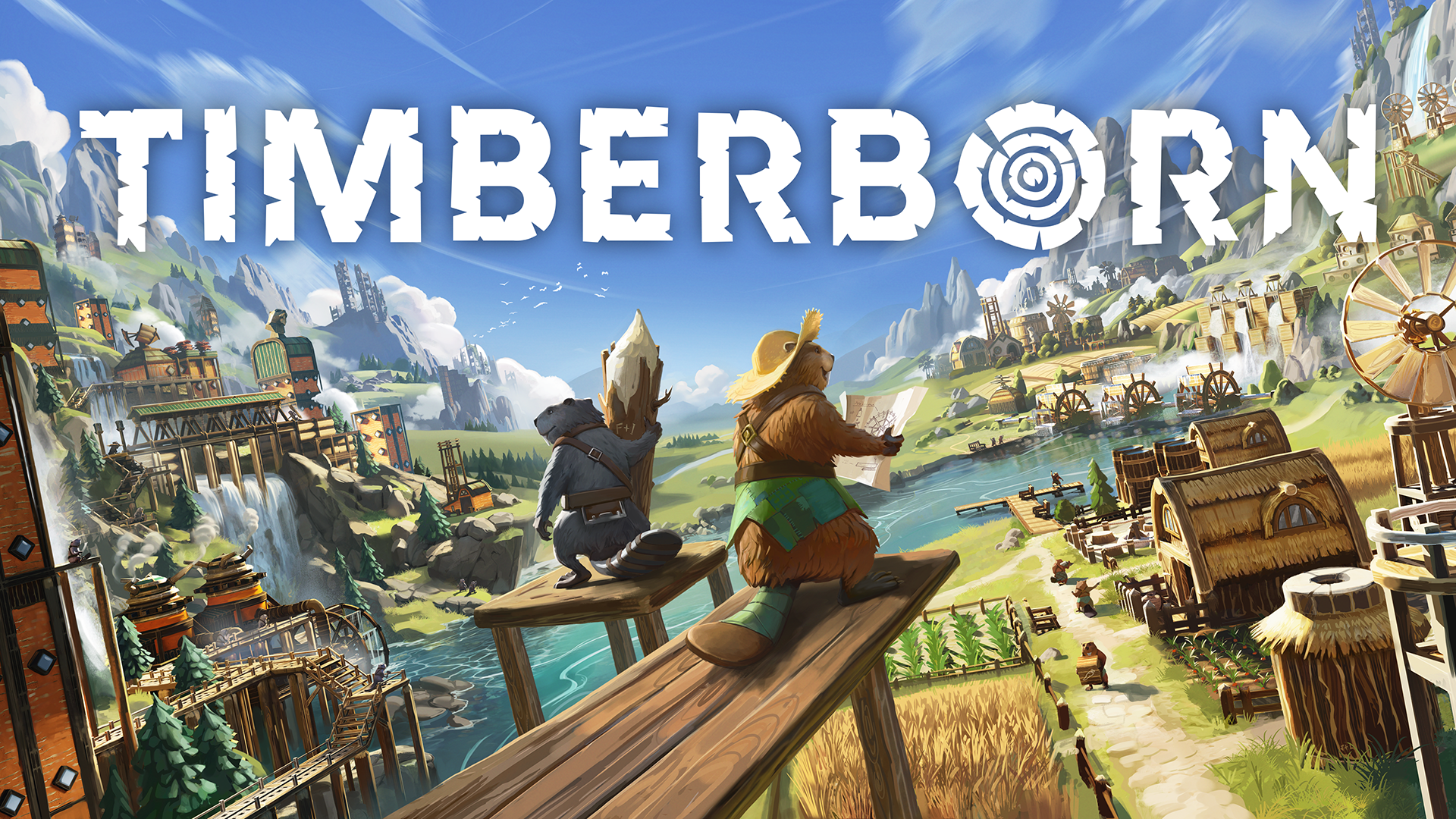
Timberborn had me hooked from the opening cinematic, where the game’s premise is clearly set. You’re a bunch of beavers who’ve outlasted humanity and are looking for a place to call home. It’s a cruel world out there, with drought and badwater threatening your survival.
My experience with the genre first began with a game called Banished, so I’m familiar with the loop. Regardless, starting a new game, I selected easy difficulty as I wanted to become familiar with the mechanics before diving in. Naturally, I named my city ‘Beavertown’ and renamed my first beaver to ‘Justin Beaver’ – creativity manifest.
Before leading my beavers to prosperity, I had to complete the tutorial, which was designed perfectly for three main reasons: 1) You learn by doing, 2) You have freedom, and 3) It’s not too long or complex. Many times, I’ve found myself reading long texts or watching videos, and restrictive gameplay during tutorials. Not here, though – Timberborn teaches through flexible gameplay.
The tutorial teaches you to be one with the beavers – food, water, and wood. It acted as a guide while allowing me to follow instructions at my own pace. I could explore other building types and systems naturally, while concurrently working toward completing tutorial objectives – amazing!
Like other city builders, you gather resources and provide entertainment to keep your beavers happy. As your city grows, so do the complexities of managing expansion, simple, right? What sets Timberborn apart is, in traditional beaver fashion, its focus on water.
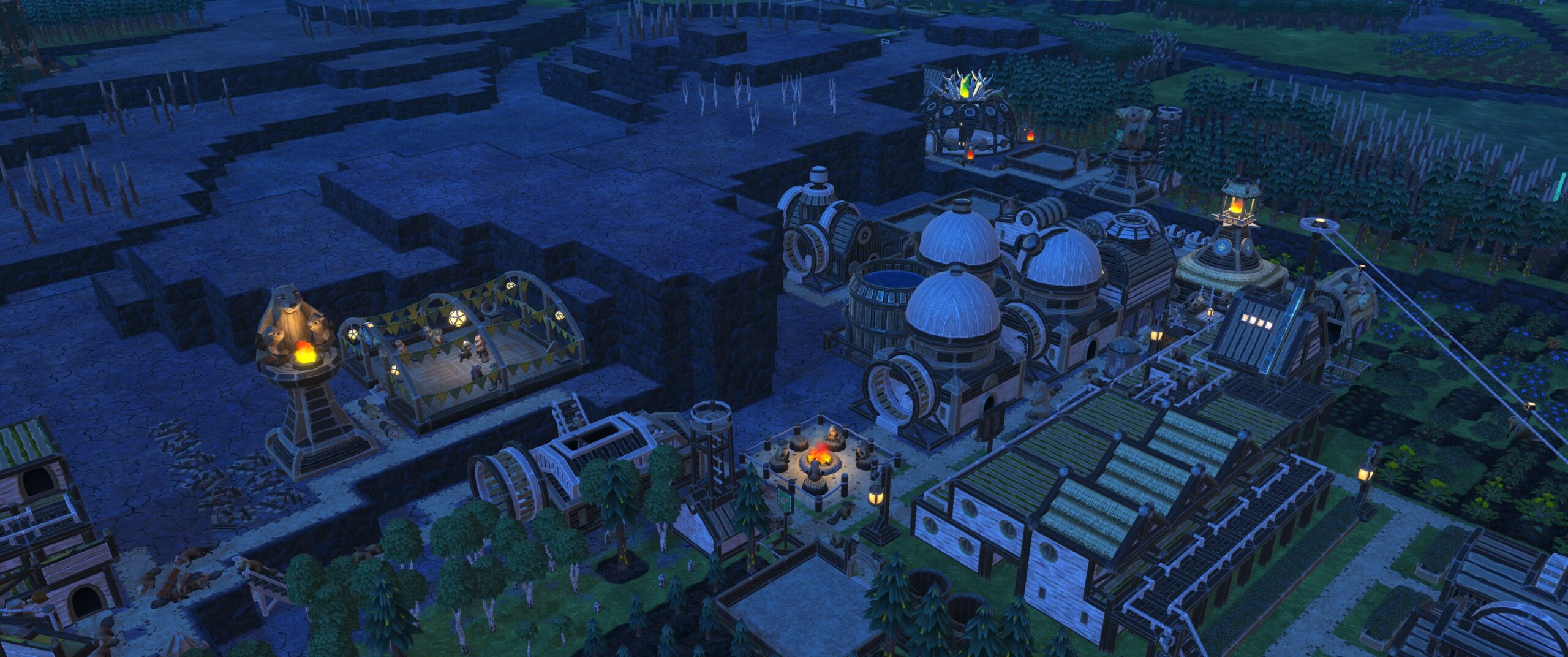
Immediately, you’re taught to gather and store water, along with using water wheels to generate power. Through play, you learn that water also ensures trees, plants, and soil all remain healthy and usable. Infrastructure for when water runs dry (or becomes polluted) plays a crucial role in your colony’s survival and success.
Surviving droughts and badwater are key to the loop, and storing a heap of water isn’t always enough. Power generation is critical when water stops flowing, and systems like manual beaver wheels, wind, geothermal, or battery power storage, to more involved projects like setting up advance dam systems can alleviate some of the stress. Using dams and dynamite can grow water networks, but be careful, you can easily flood your city.
Coupled with building verticality (exceeding 15 floors), you have fresh twists that help keep a familiar loop feeling fresh. What surprised me the most was the creative freedom on offer – the ability to build on top of buildings, or, with creative use of dams, underwater is engaging. As greenery is limited, and is required for food and wood, Timberborn naturally guides you to build upward as you expand. This is brilliant game design.
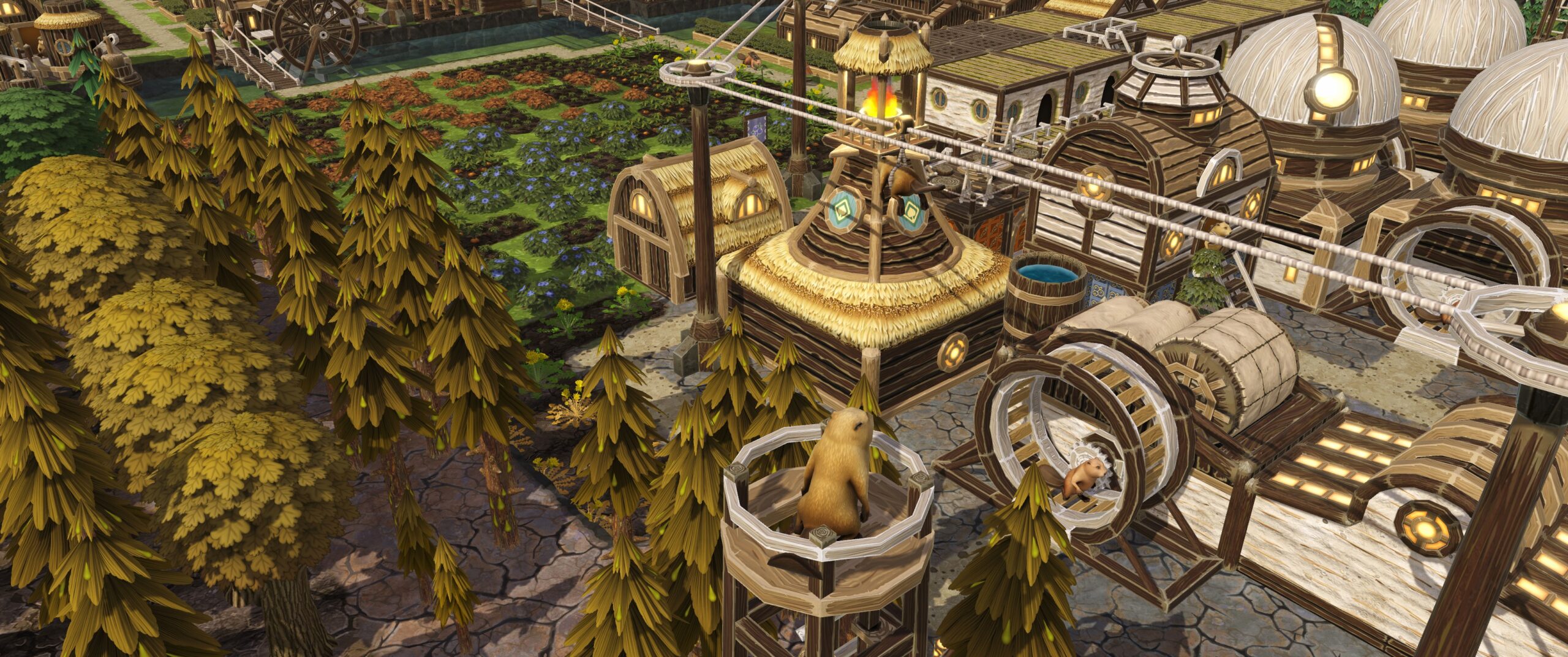
Resource management is another aspect that feels simplified. There’s no focus on intricate supply chains or transportation management – simply place what you need, and your beavers will get it to its destination. There’s a priority system, but for the most part, the focus is on growth and design, not micromanaging inputs and outputs (you can do this, however) – I love this.
Playing the game on easy puts it more on the cosy and casual side of the city builder spectrum. Hard challenges your understanding of the mechanics without feeling impossible or leaving you wanting to pull out your hair. The addition of custom settings, a map creator, and mod support means you can play however you like – I love this!
Trying hard difficulty made Timberborn feel like an entirely different game. My little beavers were no longer my friends; they were now my injury-prone, high food-consuming, large water-drinking, stress-inducing children. Starting resources were scarce, droughts were longer, and death was likely. If you play hard, my advice to you is to get a reservoir of water as soon as you can!
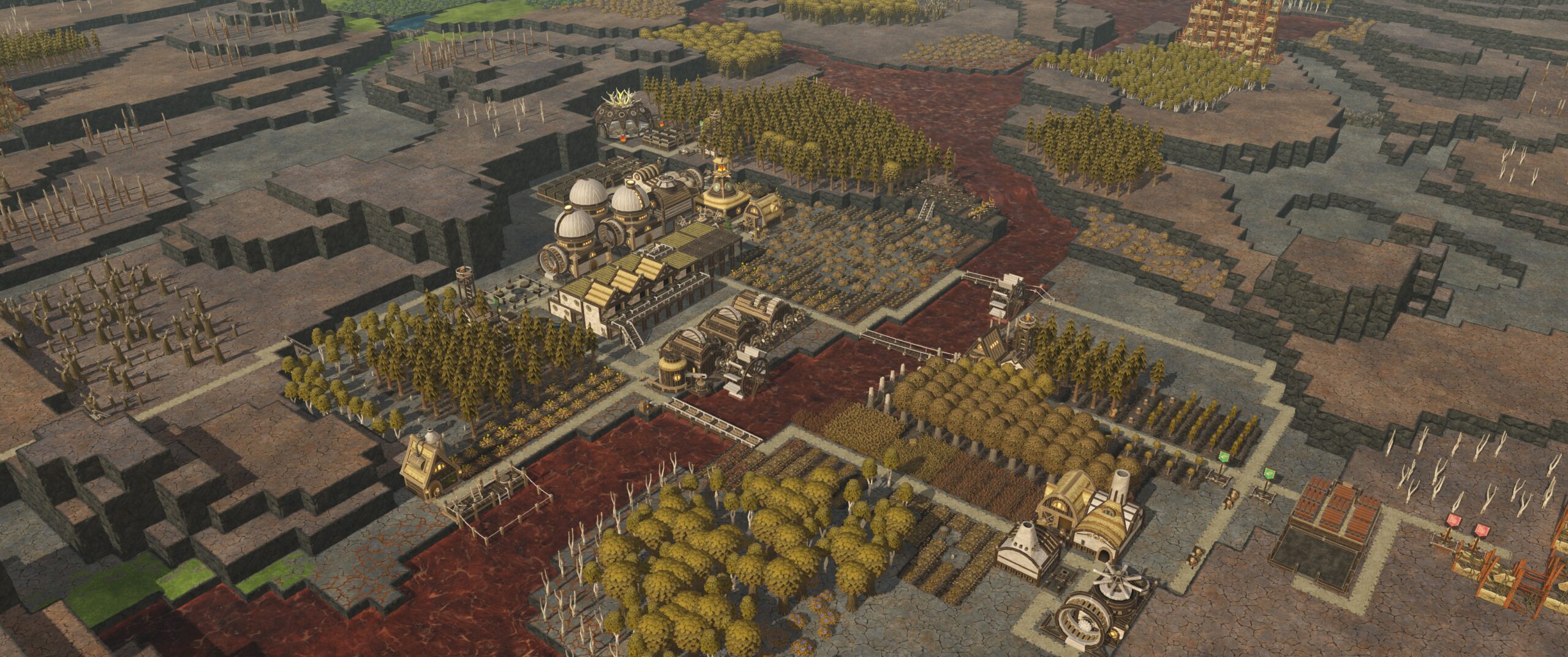
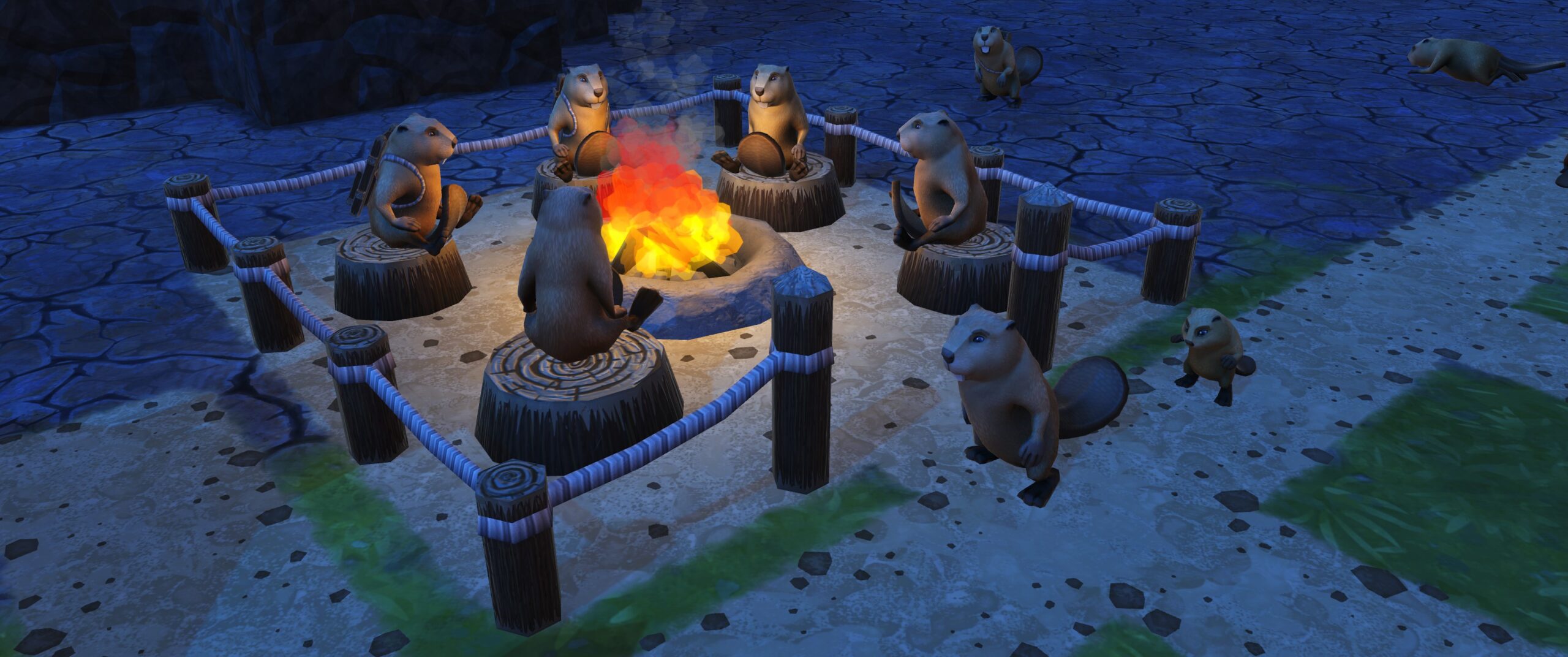
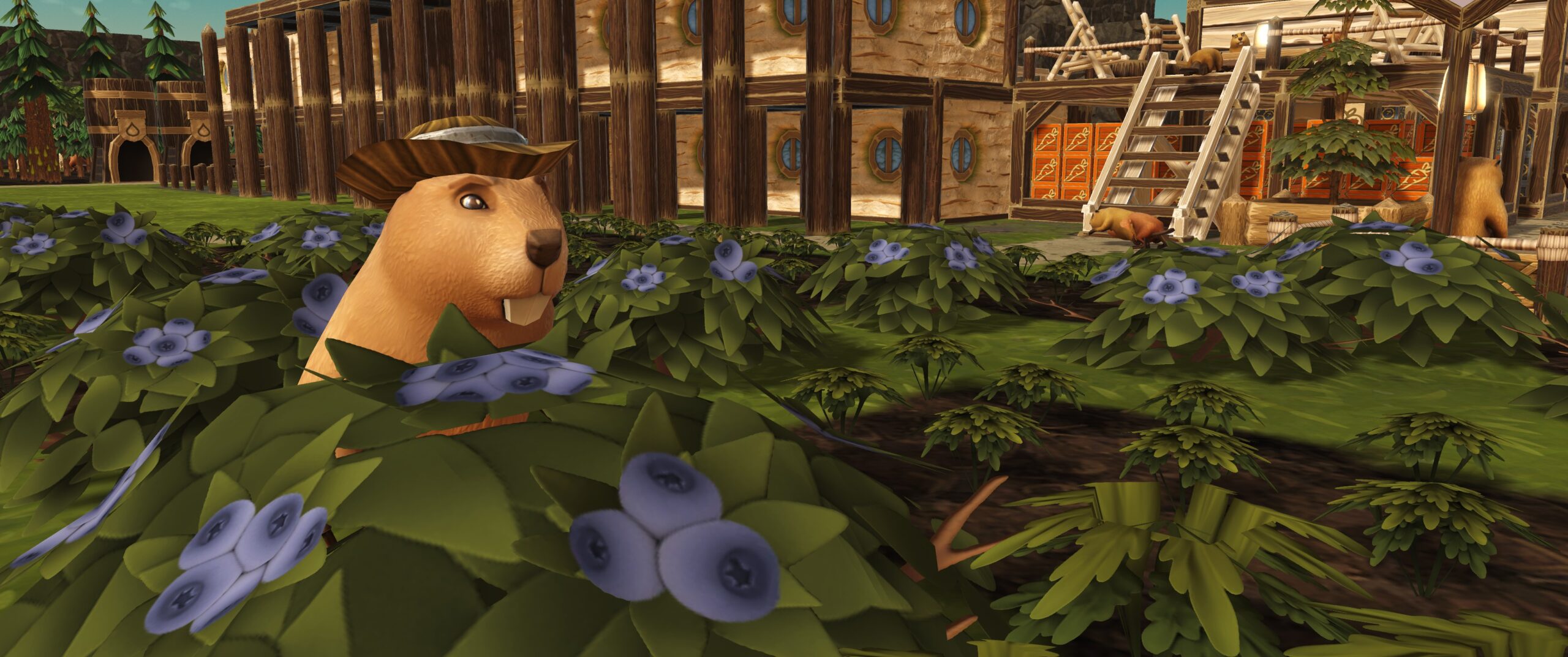
Thankfully, despite being easy, it didn’t make the game any less fun. The art direction, particularly the animations, does a lot to keep me engaged – the city genuinely feels alive. Watching beavers zipline to work and relax by the fire at night, food and trees slowly growing while machinery operates around them, the fine details are what make Timberborn great. Coupled with a soothing soundtrack, the vibe is just right to sit back, relax, and watch your beavers do what beavers naturally do – run in giant beaver wheels to generate power.
Similarly, the species deliver two entirely different Timberborn experiences thanks to their unique buildings, produce, and gameplay mechanics. Folktales are your standard wood-loving critters, while Ironteeth love, as the name may suggest, metal! The best way to explain it without breaking down each species is Folktales are your standard experience, while Ironteeth require more foresight and planning.
Now, with the inclusion of automation in 1.0, Timberborn is elevated from amazing to near-perfect. Manual levers, relays for logical operations, water sensors, weather and power meters, time-based signals, counters and indicators – they all add depth. Coupled with bots, and you can automate an entire settlement while your beavers relax 24 hours a day, at least this is the goal I set for myself. Finally, HTTP levers – streamers can now let their viewers cause chaos!
I don’t want to give away too much as it’s best experienced going in blind, but it’s a heap of fun. It’s like I’m creating simple spreadsheet formulas through the use of relays and creating colony efficiencies through the use of the carousel. For someone who does this as a living, I equally enjoy it in my games. It’s an excellent addition from the development team.
Not everything is so great, however. Subjectively, I am in love with everything Timberborn has to offer, but that doesn’t mean everyone will feel the same. There’s no real goal, no enemy, and nothing to keep you going other than your own targets (hence the cosy and casual comment I made earlier). If you struggle in setting your own goals and are put off by the lack of danger, it might not be for you. Difficulty can be ramped up to make it more challenging, but that doesn’t fix what I just mentioned.
Timberborn delivers a relaxing loop, and the engineering aspects of water are much deeper (pun intended) than I initially expected, more than make up for anything I’d consider it lacking. The automation update brings it closer to something like Factorio (albeit much, much simpler), adding depth. If you’re looking for an easier city builder to sink your teeth into (again, pun intended), look no further, Timberborn is here!
TIMBERBORN REVIEW
Timberborn’s systems may be less hardcore than others in the genre, but that’s what makes it brilliant. Offering unparalleled creative freedom, visuals and audio that’ll make you stop and stare, and a loop that really hooks you in, this one’s a winner. Lacking goals and end game may put some off, but for me, this is part of the charm.
PROS
Natural and nonrestrictive tutorial
Terraforming land and controlling water flows adds depth
Water makes the game stand out from others in the genre
Learned beaver children are called kits, and I think that’s beautiful
Visual and audio design blend seamlessly with the gameplay, delivering a title oozing charm and soul
CONS
Once things are set up, there isn’t too much to trouble you
Resource icons will take time to adjust to as there’s nothing telling you what each is
Reviewed on PC. A review code was provided by the Publisher for purposes of this review.

